
PFAS in Tap Water: Is Your Home Water Safe? [Testing and Solutions]
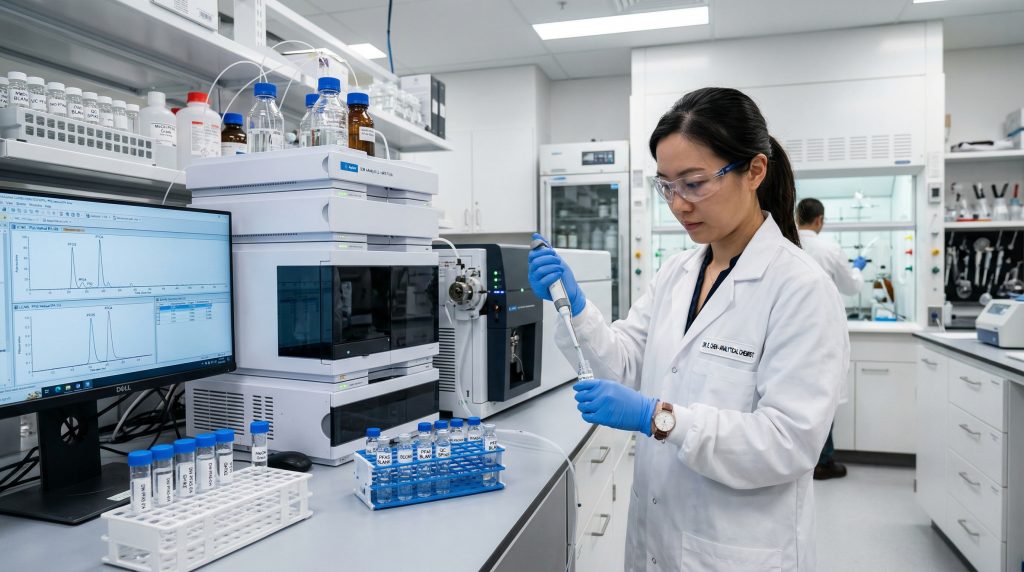
Quick Answer PFAS (per- and polyfluoroalkyl substances) have been detected in the tap water of more than 45% of US water systems tested. The EPA set enforceable limits of 4 parts per trillion (ppt) for PFOA and PFOS in April 2024 under the National Primary Drinking Water Regulation. To remove PFAS from your home water, reverse osmosis is the most effective technology (90-99% removal), followed by granular activated carbon and ion exchange systems. Testing is available through certified labs for $200-$400. What Are PFAS? PFAS are a group of more than 14,000 synthetic chemicals that have been manufactured since the 1940s. They are called “forever chemicals” because the carbon-fluorine bond is one of the strongest in chemistry, making these compounds extremely resistant to breakdown in the environment and the human body. PFAS are used in nonstick cookware, water-resistant clothing, food packaging, firefighting foam (AFFF), and thousands of industrial applications. The two most studied PFAS compounds are PFOA (perfluorooctanoic acid, used in Teflon manufacturing) and PFOS (perfluorooctane sulfonate, used in Scotchgard and firefighting foam). While these specific compounds have been phased out of US manufacturing, they persist in the environment and have been replaced by newer PFAS compounds whose health effects are still being studied. EPA PFAS Regulations In April 2024, the EPA finalized the first-ever National Primary Drinking Water Regulation for PFAS, establishing legally enforceable limits. The EPA set maximum contaminant levels (MCLs) of 4 ppt for PFOA (individually), 4 ppt for PFOS (individually), and 10 ppt for PFHxS, PFNA, and HFPO-DA (GenX), plus a hazard index limit for mixtures of these compounds. Public water systems have until 2029 to comply with these limits. To put 4 ppt in perspective, that is equivalent to 4 drops of water in an Olympic-size swimming pool. These extremely low limits reflect the EPA’s determination that PFAS pose health risks at very low concentrations. Health Concerns Associated with PFAS Research has linked PFAS exposure to increased risk of certain cancers (kidney, testicular), thyroid disease and hormone disruption, immune system effects (reduced vaccine effectiveness), elevated cholesterol levels, reproductive effects (decreased fertility, pregnancy-induced hypertension), liver damage, and developmental effects in children. The World Health Organization and the US Agency for Toxic Substances and Disease Registry (ATSDR) continue to study the full range of PFAS health effects. How PFAS Get Into Tap Water PFAS enter water supplies through multiple pathways. Industrial discharge from manufacturing facilities that use or produce PFAS is a primary source. AFFF firefighting foam used at military bases, airports, and fire training facilities has contaminated groundwater at thousands of sites. Wastewater treatment plants that receive PFAS-containing industrial or household waste discharge treated effluent containing PFAS. Landfill leachate from consumer products containing PFAS seeps into groundwater. And agricultural application of biosolids (treated sewage sludge) containing PFAS contaminates soil and groundwater. Am I at Higher Risk? You may have elevated PFAS in your water if you live near a current or former military base (especially those with fire training areas), near an airport where AFFF firefighting foam has been used, near industrial facilities that manufacture or use PFAS, downstream from a wastewater treatment plant, or near landfills that accept industrial waste. The EPA’s interactive PFAS contamination map and the EWG’s PFAS contamination database can help you assess your local risk. How to Test for PFAS in Your Water PFAS testing requires specialized laboratory equipment (liquid chromatography-mass spectrometry) and cannot be done with DIY home test kits. To test your water, contact a state-certified laboratory that offers PFAS analysis (costs range from $200-$400 per sample), request testing for the full suite of EPA-regulated PFAS compounds, and follow the lab’s sample collection instructions carefully to avoid contamination. If you are on municipal water, check your utility’s Consumer Confidence Report (CCR) or contact them directly about PFAS testing. Under the EPA’s regulation, public systems serving more than 3,300 people must monitor for PFAS by 2026 and all systems by 2027. Best Water Treatment Methods for PFAS Removal Technology PFAS Removal Rate Best For Limitations Reverse Osmosis 90-99% Most effective point-of-use solution; removes long and short-chain PFAS Single faucet; wastewater produced Granular Activated Carbon (GAC) 60-95% Effective for long-chain PFAS (PFOA, PFOS); affordable Less effective for short-chain PFAS; frequent replacement needed Ion Exchange (IX) 90-99% Effective for both long and short-chain; no wastewater More expensive; resin requires periodic replacement Nanofiltration 80-95% Emerging technology; less wastewater than RO Less widely available; variable performance Reverse Osmosis: The Top Choice for Home PFAS Removal For residential applications, reverse osmosis provides the most reliable and thorough PFAS removal. RO membranes reject both long-chain PFAS (like PFOA and PFOS) and the more difficult short-chain PFAS compounds that carbon filters may miss. A quality under-sink RO system from AMPAC Water Systems provides 90-99% PFAS removal along with lead, arsenic, TDS, and dozens of other contaminants. Activated Carbon Filtration Granular activated carbon (GAC) is effective for long-chain PFAS (PFOA, PFOS) but less reliable for short-chain compounds like GenX, PFBS, and PFBA. Carbon block filters generally outperform loose granular carbon. If using carbon alone for PFAS, choose a system with NSF/ANSI P473 certification specifically for PFAS removal, and replace cartridges more frequently than the standard schedule. Key Takeaway: PFAS contamination is widespread and the EPA’s new 4 ppt limits for PFOA and PFOS are among the strictest drinking water standards ever set. If you are concerned about PFAS, get a certified lab test, then install a reverse osmosis system for the most effective point-of-use removal. For whole-house PFAS treatment, consult a water treatment professional about GAC or IX systems sized for your household’s flow rate. Contact AMPAC Water Systems for PFAS treatment recommendations. Frequently Asked Questions Does boiling water remove PFAS? No. Boiling water does not remove PFAS. In fact, boiling can concentrate PFAS as water evaporates while the chemicals remain. PFAS are extremely heat-stable (they are used in nonstick cookware precisely because they withstand high temperatures). Only filtration technologies like reverse osmosis, activated carbon, and ion exchange can remove PFAS from water. Do Brita filters remove
PFAS in Tap Water: Is Your Home Water Safe? [Testing and Solutions] Read More »