Complete Guide to Replacement Water Filters: When and How to Change Them

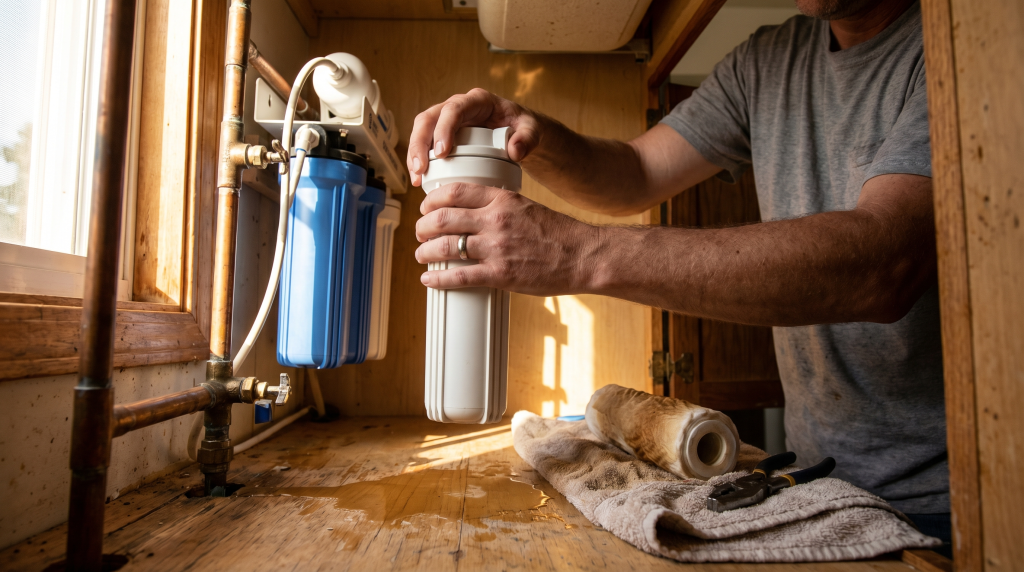
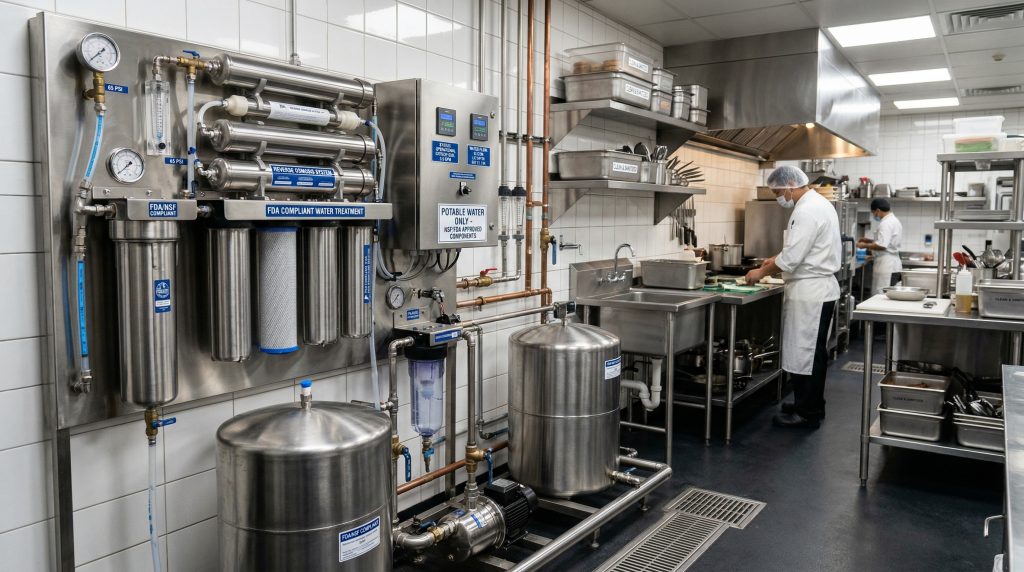
Quick Answer Replace sediment pre-filters every 3-6 months, carbon filters every 6-12 months, RO membranes every 2-5 years, and UV lamps annually. Signs your filter needs changing include reduced water flow, changed taste or odor, discolored water, and exceeding the manufacturer’s rated gallon capacity. Using a filter past its lifespan reduces its effectiveness and can allow contaminants to pass through or even release previously captured contaminants back into your water. Why Timely Filter Replacement Matters Water filters have a finite capacity to capture contaminants. As filter media becomes saturated, its ability to remove contaminants decreases progressively. An overused carbon filter may actually release absorbed chemicals back into filtered water through a process called desorption. An overused sediment filter restricts flow, increases system pressure, and can allow particles through as the media breaks down. Regular filter replacement is not just a maintenance task — it is essential for your water treatment system to actually deliver the clean water you expect. Filter Replacement Schedule by Type Filter Type Typical Lifespan Rated Capacity Key Signs of Exhaustion Sediment pre-filter (5 micron) 3-6 months 5,000-20,000 gallons Reduced flow rate; visible discoloration of filter Carbon block / GAC 6-12 months 5,000-20,000 gallons Chlorine taste returns; odor changes RO membrane 2-5 years N/A (rated by rejection %) TDS creep (rising TDS in permeate); reduced output Inline post-carbon (polishing) 12 months 2,500-5,000 gallons Taste changes in RO water UV lamp 12 months (9,000 hours) N/A (output degrades) UV intensity alarm; annual schedule UV quartz sleeve 2-3 years N/A Visible mineral deposits; scratches; etching Water softener resin 10-15 years N/A Hardness breakthrough despite salt; resin fragments in water Whole-house carbon tank 3-5 years (media) 500,000-1,000,000 gallons Chlorine breakthrough; taste/odor changes Sediment Pre-Filters: Your First Line of Defense Sediment pre-filters capture sand, silt, rust, and other particles before they reach finer filtration stages. Available in 1, 5, 10, and 20-micron ratings, they protect downstream filters and RO membranes from premature clogging. On well water with high sediment, you may need to replace these every 1-3 months. On clean municipal water, 6-month intervals are common. Spun polypropylene and pleated polyester are the two main types. Pleated filters have more surface area and can be rinsed and reused a few times before replacement, making them more economical for high-sediment applications. Carbon Filters: Chlorine, Taste, and Chemical Removal Carbon filters use adsorption to capture chlorine, VOCs, pesticides, and organic chemicals. The two main types are granular activated carbon (GAC) and carbon block. Carbon block filters provide finer filtration and more consistent performance but have higher pressure drop. GAC filters allow higher flow rates but may channel (water finds the path of least resistance through the carbon bed). The simplest way to tell if your carbon filter is exhausted is the return of chlorine taste or smell. If your municipal water normally has a noticeable chlorine taste and that taste returns, your carbon filter needs replacement. A chlorine test strip ($5-$10 for a pack) provides a more precise measurement. RO Membranes: The Heart of Your RO System RO membranes are the most expensive filter component to replace but last the longest. A quality membrane lasts 2-5 years depending on feed water quality, pre-filtration effectiveness, and usage volume. Monitor membrane performance by measuring the TDS of your permeate (filtered) water with a digital TDS meter ($10-$15). When permeate TDS exceeds 10-15% of feed water TDS, the membrane is losing rejection capability and should be replaced. Pre-filtration is critical for membrane longevity. Chlorine destroys RO membranes rapidly, and hard water causes scaling. Ensure your carbon pre-filter and water softener (if applicable) are maintained properly to protect your membrane investment. How to Replace Common Water Filters Under-Sink RO System Filters Turn off the feed water supply valve to the RO system Open the RO faucet to depressurize the system Place a towel under the filter housings to catch drips Unscrew the filter housing using the included wrench (turn counterclockwise) Remove the old filter and discard Clean the housing interior with warm water (no soap) Insert the new filter, ensuring proper orientation Hand-tighten the housing, then snug with the wrench (do not overtighten) Turn on the feed water and check for leaks Flush the first 2-3 tanks of water to remove carbon fines and manufacturing residues Whole-House Filter Cartridges Turn off the main water supply upstream of the filter housing Open a downstream faucet to release pressure Place a bucket under the housing to catch water Unscrew the housing sump using the included wrench Remove the old cartridge and inspect the O-ring for damage Lubricate the O-ring with food-grade silicone grease Insert the new cartridge Reinstall the housing and hand-tighten, then snug with wrench Slowly turn on the water supply and check for leaks Run water through the system for 5 minutes before using Where to Buy Replacement Filters Always use filters that match your system’s specifications. Using incorrect filter sizes or off-brand cartridges that do not meet the original specifications can compromise filtration performance and void your warranty. AMPAC Water Systems provides replacement filters and membranes for all AMPAC systems, with guaranteed compatibility and certified performance. When purchasing replacement filters, verify the exact model number, dimensions, and connection type. For RO membranes, match the GPD (gallons per day) rating. For carbon filters, check the micron rating and NSF certifications. Key Takeaway: Your water treatment system is only as effective as its newest filter. Set calendar reminders for replacement schedules, monitor water taste and flow rate as early warning signs, and always use manufacturer-specified replacement filters. Proper maintenance turns a one-time purchase into years of reliable, clean water for your household. Contact AMPAC Water Systems for replacement filter recommendations and technical support. Frequently Asked Questions How do I know when to change my water filter? Watch for these signs: reduced water flow or pressure, return of chlorine taste or odor, rising TDS readings (for RO systems), visible discoloration of the filter cartridge, and reaching the manufacturer’s recommended replacement date or gallon capacity. A combination of scheduled

Complete Guide to Replacement Water Filters: When and How to Change Them Read More »

PFAS in Tap Water: Is Your Home Water Safe? [Testing and Solutions]

Quick Answer PFAS (per- and polyfluoroalkyl substances) have been detected in the tap water of more than 45% of US water systems tested. The EPA set enforceable limits of 4 parts per trillion (ppt) for PFOA and PFOS in April 2024 under the National Primary Drinking Water Regulation. To remove PFAS from your home water, reverse osmosis is the most effective technology (90-99% removal), followed by granular activated carbon and ion exchange systems. Testing is available through certified labs for $200-$400. What Are PFAS? PFAS are a group of more than 14,000 synthetic chemicals that have been manufactured since the 1940s. They are called “forever chemicals” because the carbon-fluorine bond is one of the strongest in chemistry, making these compounds extremely resistant to breakdown in the environment and the human body. PFAS are used in nonstick cookware, water-resistant clothing, food packaging, firefighting foam (AFFF), and thousands of industrial applications. The two most studied PFAS compounds are PFOA (perfluorooctanoic acid, used in Teflon manufacturing) and PFOS (perfluorooctane sulfonate, used in Scotchgard and firefighting foam). While these specific compounds have been phased out of US manufacturing, they persist in the environment and have been replaced by newer PFAS compounds whose health effects are still being studied. EPA PFAS Regulations In April 2024, the EPA finalized the first-ever National Primary Drinking Water Regulation for PFAS, establishing legally enforceable limits. The EPA set maximum contaminant levels (MCLs) of 4 ppt for PFOA (individually), 4 ppt for PFOS (individually), and 10 ppt for PFHxS, PFNA, and HFPO-DA (GenX), plus a hazard index limit for mixtures of these compounds. Public water systems have until 2029 to comply with these limits. To put 4 ppt in perspective, that is equivalent to 4 drops of water in an Olympic-size swimming pool. These extremely low limits reflect the EPA’s determination that PFAS pose health risks at very low concentrations. Health Concerns Associated with PFAS Research has linked PFAS exposure to increased risk of certain cancers (kidney, testicular), thyroid disease and hormone disruption, immune system effects (reduced vaccine effectiveness), elevated cholesterol levels, reproductive effects (decreased fertility, pregnancy-induced hypertension), liver damage, and developmental effects in children. The World Health Organization and the US Agency for Toxic Substances and Disease Registry (ATSDR) continue to study the full range of PFAS health effects. How PFAS Get Into Tap Water PFAS enter water supplies through multiple pathways. Industrial discharge from manufacturing facilities that use or produce PFAS is a primary source. AFFF firefighting foam used at military bases, airports, and fire training facilities has contaminated groundwater at thousands of sites. Wastewater treatment plants that receive PFAS-containing industrial or household waste discharge treated effluent containing PFAS. Landfill leachate from consumer products containing PFAS seeps into groundwater. And agricultural application of biosolids (treated sewage sludge) containing PFAS contaminates soil and groundwater. Am I at Higher Risk? You may have elevated PFAS in your water if you live near a current or former military base (especially those with fire training areas), near an airport where AFFF firefighting foam has been used, near industrial facilities that manufacture or use PFAS, downstream from a wastewater treatment plant, or near landfills that accept industrial waste. The EPA’s interactive PFAS contamination map and the EWG’s PFAS contamination database can help you assess your local risk. How to Test for PFAS in Your Water PFAS testing requires specialized laboratory equipment (liquid chromatography-mass spectrometry) and cannot be done with DIY home test kits. To test your water, contact a state-certified laboratory that offers PFAS analysis (costs range from $200-$400 per sample), request testing for the full suite of EPA-regulated PFAS compounds, and follow the lab’s sample collection instructions carefully to avoid contamination. If you are on municipal water, check your utility’s Consumer Confidence Report (CCR) or contact them directly about PFAS testing. Under the EPA’s regulation, public systems serving more than 3,300 people must monitor for PFAS by 2026 and all systems by 2027. Best Water Treatment Methods for PFAS Removal Technology PFAS Removal Rate Best For Limitations Reverse Osmosis 90-99% Most effective point-of-use solution; removes long and short-chain PFAS Single faucet; wastewater produced Granular Activated Carbon (GAC) 60-95% Effective for long-chain PFAS (PFOA, PFOS); affordable Less effective for short-chain PFAS; frequent replacement needed Ion Exchange (IX) 90-99% Effective for both long and short-chain; no wastewater More expensive; resin requires periodic replacement Nanofiltration 80-95% Emerging technology; less wastewater than RO Less widely available; variable performance Reverse Osmosis: The Top Choice for Home PFAS Removal For residential applications, reverse osmosis provides the most reliable and thorough PFAS removal. RO membranes reject both long-chain PFAS (like PFOA and PFOS) and the more difficult short-chain PFAS compounds that carbon filters may miss. A quality under-sink RO system from AMPAC Water Systems provides 90-99% PFAS removal along with lead, arsenic, TDS, and dozens of other contaminants. Activated Carbon Filtration Granular activated carbon (GAC) is effective for long-chain PFAS (PFOA, PFOS) but less reliable for short-chain compounds like GenX, PFBS, and PFBA. Carbon block filters generally outperform loose granular carbon. If using carbon alone for PFAS, choose a system with NSF/ANSI P473 certification specifically for PFAS removal, and replace cartridges more frequently than the standard schedule. Key Takeaway: PFAS contamination is widespread and the EPA’s new 4 ppt limits for PFOA and PFOS are among the strictest drinking water standards ever set. If you are concerned about PFAS, get a certified lab test, then install a reverse osmosis system for the most effective point-of-use removal. For whole-house PFAS treatment, consult a water treatment professional about GAC or IX systems sized for your household’s flow rate. Contact AMPAC Water Systems for PFAS treatment recommendations. Frequently Asked Questions Does boiling water remove PFAS? No. Boiling water does not remove PFAS. In fact, boiling can concentrate PFAS as water evaporates while the chemicals remain. PFAS are extremely heat-stable (they are used in nonstick cookware precisely because they withstand high temperatures). Only filtration technologies like reverse osmosis, activated carbon, and ion exchange can remove PFAS from water. Do Brita filters remove

PFAS in Tap Water: Is Your Home Water Safe? [Testing and Solutions] Read More »

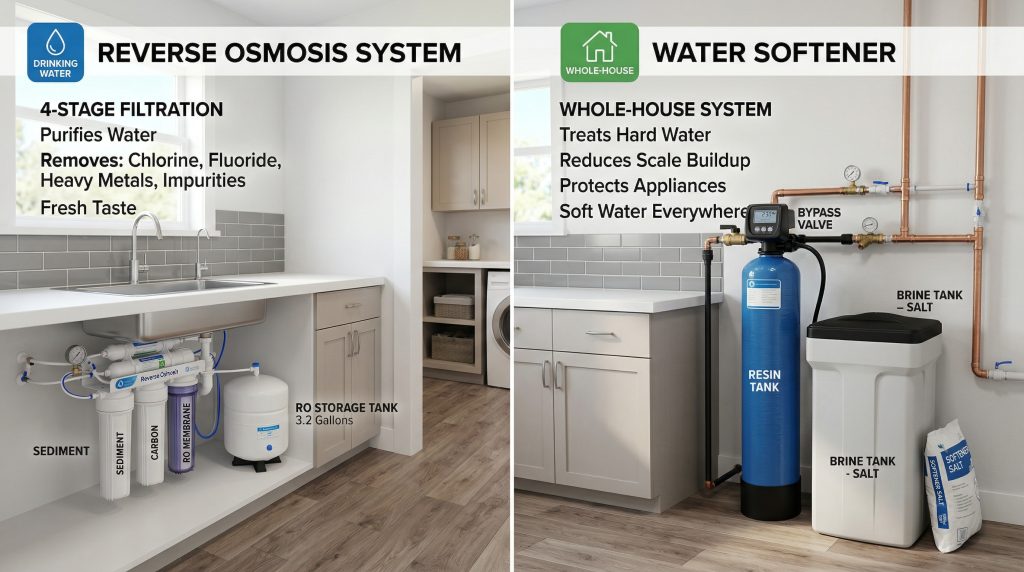
Reverse osmosis system compared with water softener side by side

Reverse Osmosis vs Water Softener: What’s the Difference?

Quick Answer Reverse osmosis (RO) and water softeners solve different water problems and are not interchangeable. RO removes dissolved contaminants like lead, PFAS, arsenic, fluoride, and TDS by forcing water through a semi-permeable membrane. Water softeners remove hardness minerals (calcium and magnesium) through ion exchange. Many homes benefit from both: a softener to protect plumbing and appliances from scale, and an RO system for the purest drinking water. Used together, the softener also extends the life of the RO membrane. How Reverse Osmosis Works Reverse osmosis uses hydraulic pressure to push water through a semi-permeable membrane with pores approximately 0.0001 microns in diameter. This membrane rejects 95-99% of dissolved solids, allowing only water molecules and a small percentage of dissolved minerals to pass through. Most residential RO systems include multiple stages of pre- and post-filtration. A typical 4-5 stage RO system includes a sediment pre-filter (5 microns) to remove particles, a carbon pre-filter to remove chlorine (which damages RO membranes), the RO membrane (the primary purification stage), a post-carbon or polishing filter for final taste refinement, and optionally a remineralization filter to add beneficial minerals back. How Water Softeners Work Water softeners use ion exchange resin to replace calcium and magnesium ions (which cause hardness) with sodium or potassium ions. As hard water flows through the resin tank, hardness minerals are captured by the resin beads. When the resin becomes saturated, the system regenerates by flushing with a brine (salt water) solution, washing the captured minerals to drain and recharging the resin. Softeners treat all water entering your home (point-of-entry), while RO systems are typically installed at a single point-of-use (usually the kitchen sink). What Each System Removes Contaminant Reverse Osmosis Water Softener Calcium (hardness) Yes (95-99%) Yes (99%+) Magnesium (hardness) Yes (95-99%) Yes (99%+) Lead Yes (95-99%) No PFAS Yes (90-99%) No Arsenic Yes (90-97%) No Fluoride Yes (90-95%) No Nitrate Yes (85-95%) No Chlorine Yes (via carbon pre-filter) No TDS (dissolved solids) Yes (95-99%) Partially (exchanges ions; TDS stays similar) Iron (ferrous, low levels) Yes Yes (under 2 ppm) Bacteria / viruses Partial (not rated for disinfection) No Sodium Yes (90-95%) No (adds sodium) When You Need a Reverse Osmosis System An RO system is the right choice when your water contains dissolved contaminants that softeners cannot remove. Install RO if your water test shows elevated lead (any detectable level, especially with children), PFAS contamination (EPA health advisory is 4 ppt for PFOA/PFOS), arsenic above 10 ppb (EPA MCL), high TDS giving water a flat or mineral taste, nitrates above 5 mg/L (halfway to the 10 mg/L MCL), or fluoride you wish to reduce. AMPAC Water Systems offers residential RO systems ranging from compact under-sink units to high-capacity systems for large households. When You Need a Water Softener A water softener addresses hard water problems throughout your entire home. Install a softener if you see white scale deposits on faucets and showerheads, your water heater has reduced efficiency or shortened lifespan, soap and shampoo do not lather well, laundry feels stiff or looks dingy, your water test shows hardness above 7 grains per gallon, or you have hard water feeding steam equipment, dishwashers, or ice machines. Why Many Homes Need Both RO and softeners complement each other perfectly. The softener treats the entire home’s water supply, preventing scale in pipes, water heaters, and appliances. The RO system at the kitchen sink provides the purest possible drinking and cooking water. Additionally, softened water extends RO membrane life significantly — hard water causes mineral scaling on RO membranes, reducing their effectiveness and lifespan from 3-5 years down to 1-2 years. The recommended installation order is: incoming water line to water softener to house distribution (and branch) to RO system at kitchen sink. This ensures the RO membrane receives softened, pre-treated water for maximum performance and longevity. Cost Comparison Factor Reverse Osmosis Water Softener System cost $200-$800 (residential) $500-$2,500 Installation DIY ($0) or $100-$200 Professional $200-$500 Annual maintenance $50-$150 (filters/membrane) $100-$250 (salt + maintenance) Coverage Single faucet Whole house Water waste 1-4 gallons per gallon produced 50-100 gallons per regeneration Lifespan 10-15 years (with filter changes) 15-20 years (with resin replacement) Key Takeaway: Reverse osmosis and water softeners are not competing technologies — they address different problems. A softener removes hardness minerals to protect your plumbing and appliances. An RO system removes dissolved contaminants (lead, PFAS, arsenic, TDS) for the cleanest possible drinking water. For comprehensive home water treatment, the ideal setup is a whole-house softener combined with an under-sink RO system. Contact AMPAC Water Systems to design the right combination for your water quality. Frequently Asked Questions Does reverse osmosis soften water? Technically yes — RO removes calcium and magnesium along with other dissolved minerals. However, RO is not practical as a whole-house softening solution because it operates at low flow rates (50-100 gallons per day), produces wastewater, and is far more expensive per gallon than ion exchange softening. Use a softener for whole-house hardness reduction and RO for drinking water purification. Do I need a water softener if I have reverse osmosis? If your water is hard (above 7 gpg), yes. Without a softener, hard water will cause scale throughout your home (water heater, pipes, fixtures, appliances) and will also shorten the life of your RO membrane. The RO only protects the one faucet it is connected to. A softener protects your entire plumbing system and pre-treats water for the RO system. Will a water softener remove lead? No. Water softeners use ion exchange designed to capture calcium and magnesium ions. They do not effectively remove lead, arsenic, PFAS, nitrates, or other dissolved contaminants. For lead removal, you need either a reverse osmosis system or a carbon block filter specifically certified to NSF/ANSI Standard 53 for lead reduction. Can I install RO without a softener? Yes, but if your water is hard, the RO membrane will scale faster and need more frequent replacement. Many RO manufacturers recommend softened feed water or include scale inhibitor cartridges for hard water

Reverse Osmosis vs Water Softener: What’s the Difference? Read More »

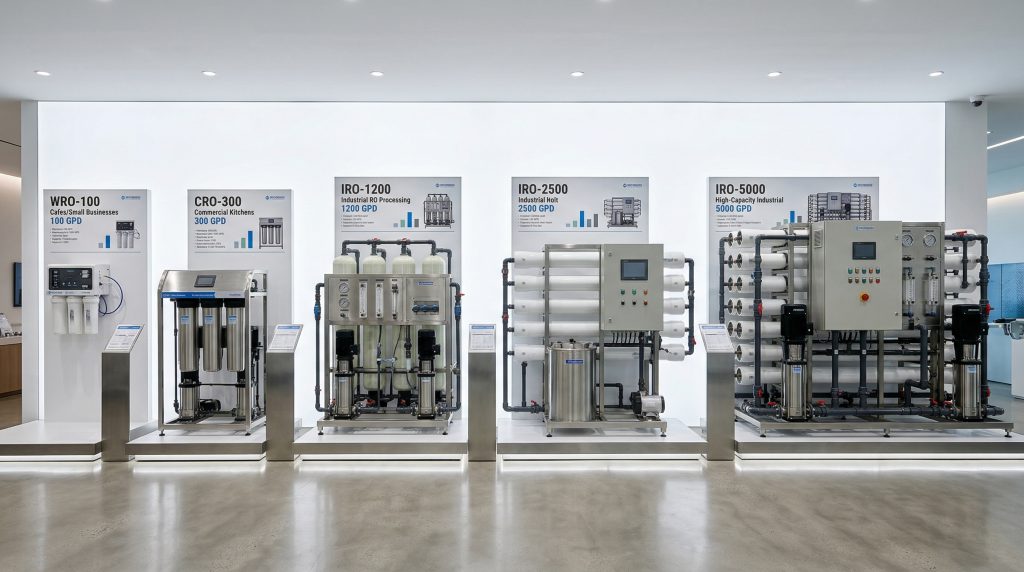
Commercial reverse osmosis systems product lineup

Choosing a Commercial RO System: 2026 Buyer’s Checklist

Why Does Choosing the Right Commercial RO System Matter So Much? A commercial reverse osmosis system is not a commodity purchase. It is a capital investment that will operate for 10–20 years, consume energy and chemicals every day, and directly affect the quality of your water supply, your production processes, or both. The difference between a well-specified system and a poorly specified one is not marginal—it is the difference between reliable, cost-effective operation and years of underperformance, excessive maintenance, and premature replacement. The commercial RO market includes everything from compact 1,000 GPD units for restaurants and hotels to 500,000+ GPD industrial systems for manufacturing facilities and municipal water supplies. This range means that the evaluation criteria and the questions you need to ask vary depending on your application. This guide walks through the critical decision points in order, from initial sizing through compliance, total cost of ownership, and vendor evaluation. How Do You Properly Size a Commercial RO System? Undersizing is the most common and most costly mistake in commercial RO procurement. An undersized system runs at maximum capacity continuously, accelerating membrane fouling, increasing energy consumption, and shortening component life. Oversizing wastes capital but is far less damaging than undersizing. Step 1: Determine Peak Demand, Not Average Start with your water consumption data. If you have metered records, analyze at least 12 months of daily consumption to capture seasonal variations. Identify the peak demand day, not the average. Your system needs to meet peak demand reliably, not just average demand. Common demand patterns by application: Hotels and resorts: Peak demand on full-occupancy weekends; may be 2–3x average daily use Restaurants and food service: Peak during meal service hours; demand is highly concentrated into 4–6 hours per day Manufacturing: Demand correlates with production schedules; night shifts and seasonal production runs affect sizing Healthcare facilities: Consistent demand with critical quality requirements; no tolerance for supply interruption Data centers: Cooling water demand scales with compute load; peak during summer months Step 2: Add Design Margin After establishing peak demand, add 20–30% design margin. This margin accounts for: Membrane flux decline over time (membranes lose 10–20% of their production capacity over a typical 3–5 year life) Temperature variations (colder feedwater reduces membrane permeability—production drops approximately 3% for every 1°C decrease below the design temperature) Facility growth (it is far less expensive to build in capacity now than to retrofit later) Maintenance windows (when one membrane vessel is offline for cleaning, the remaining vessels must carry the load) Step 3: Account for Recovery Rate RO systems do not convert 100% of feed water to product water. Recovery rates for commercial systems typically range from 50% (seawater) to 85% (low-TDS brackish/municipal). If you need 10,000 GPD of permeate and your system will operate at 75% recovery, the feed water requirement is approximately 13,300 GPD. Make sure your source water supply can deliver the required feed volume. Why Is Feedwater Analysis the Most Important Step? A comprehensive feedwater analysis is the single most important input to RO system design. It determines membrane selection, pretreatment requirements, antiscalant chemistry, expected recovery rate, and long-term operating costs. Specifying a system without a proper feedwater analysis is like designing a building without a soil test—you are guessing at the foundation. Essential Parameters At minimum, the feedwater analysis should include: Parameter Category Specific Tests Why It Matters General chemistry TDS, pH, temperature, conductivity Determines operating pressure, membrane type, and energy requirements Scaling potential Calcium, magnesium, barium, strontium, sulfate, silica, fluoride Determines maximum recovery rate and antiscalant requirements Fouling potential SDI (Silt Density Index), turbidity, TOC, iron, manganese Determines pretreatment requirements and cleaning frequency Biological indicators Bacteria count, ATP Determines biofouling risk and disinfection pretreatment needs Oxidant levels Free chlorine, combined chlorine, chloramine Determines dechlorination pretreatment—critical for membrane protection Regulatory contaminants PFAS, nitrate, arsenic, lead (as applicable) Determines whether the system must meet specific contaminant removal targets If your feedwater source is a municipal supply, contact your utility for the most recent annual Water Quality Report (Consumer Confidence Report). If drawing from a well, arrange for a certified laboratory analysis. AMPAC’s engineering team can advise on the specific parameters needed for your application and recommend appropriate testing laboratories. Seasonal Variation A single water sample is not sufficient for system design. Source water quality varies seasonally. Well water chemistry can shift with aquifer levels. Municipal supply quality varies with source blending and seasonal demand. Ideally, collect and analyze samples quarterly over a year to capture the full range of variation. At minimum, collect samples during both the warmest and coldest months. How Do You Select the Right Membrane Type? Membrane selection is driven by feedwater chemistry, target permeate quality, and desired recovery rate. The two primary categories for commercial RO are: Brackish Water (BW) Membranes Designed for feedwater with TDS below approximately 10,000 ppm. BW membranes operate at lower pressures (100–300 psi), consume less energy, and achieve higher recovery rates (75–90%). They are the standard choice for treating municipal water, well water, and most industrial process water. Within the BW category, sub-types include: High rejection: 99.5%+ salt rejection for applications requiring the highest permeate quality (boiler feed, pharmaceutical, semiconductor) Low energy: Optimized for maximum production at minimum pressure, reducing energy costs for standard water quality applications Fouling resistant: Modified surface chemistry that resists organic and biofouling, ideal for high-TOC feedwaters or biological treatment effluent Seawater (SW) Membranes Designed for feedwater with TDS above 10,000 ppm, up to full-strength seawater at 35,000+ ppm. SW membranes operate at higher pressures (800–1,200 psi) and achieve lower recovery rates (35–50%) but are essential for coastal applications, offshore platforms, and high-salinity industrial wastewater. AMPAC systems are configured with membrane elements selected from leading manufacturers including Toray, DuPont (Dow), Hydranautics, and LG Chem, matched to the specific feedwater chemistry of each installation. What Pretreatment Does a Commercial RO System Require? Pretreatment protects the RO membranes and determines how long they will last. Skimping on pretreatment is the most reliable way to shorten membrane life and increase operating costs. Minimum

Choosing a Commercial RO System: 2026 Buyer’s Checklist Read More »

Smart water treatment IoT and AI monitoring system

Smart Water Systems: How IoT and AI Are Changing Treatment

What Is Driving the Smart Water Revolution? The water treatment industry has historically been one of the slowest sectors to adopt digital technology. For decades, operators relied on periodic grab samples, manual log sheets, and reactive maintenance schedules. A membrane failed, you replaced it. A chemical dosing system drifted out of spec, you corrected it after the next lab test came back. That approach is becoming untenable. Three forces are converging to make smart water systems not just advantageous but necessary. The Workforce Gap The American Water Works Association (AWWA) estimates that 30–50% of the water sector workforce will be eligible for retirement within the next decade. This is not just a hiring problem; it is an institutional knowledge problem. When a veteran operator with 25 years of experience reading membrane behavior walks out the door, that knowledge goes with them. Automated monitoring and AI-driven diagnostics can capture and operationalize that expertise, making it available to less experienced operators around the clock. Regulatory Complexity The regulatory landscape is expanding rapidly. New MCLs for PFAS compounds, anticipated standards for microplastics, tightening discharge limits for nitrogen and phosphorus—all require more frequent monitoring and faster response times than manual processes can deliver. Real-time monitoring with automated compliance reporting is becoming a practical necessity for staying ahead of multi-contaminant regulatory requirements. Economic Pressure Energy costs, chemical costs, and membrane replacement costs all represent significant operating expenses for water treatment systems. Even modest efficiency improvements—2–5% reductions in energy consumption, 10–15% improvements in chemical utilization, 15–25% extensions in membrane life—translate to substantial savings over a system’s operating life. Smart monitoring and optimization make those improvements achievable and sustainable. How Does IoT Monitoring Work in Water Treatment? Internet of Things (IoT) monitoring in water treatment refers to the network of connected sensors, controllers, and data platforms that continuously measure, transmit, and analyze operational parameters. The concept is straightforward; the implementation has reached a level of maturity that makes it practical for systems of all sizes. The Sensor Layer Modern water treatment sensors measure parameters including: Total dissolved solids (TDS) / conductivity: Continuous measurement of permeate and reject quality, replacing periodic grab samples with real-time trending. Flow rate: Feed, permeate, and concentrate flows measured with electromagnetic or ultrasonic flowmeters, enabling real-time recovery rate calculation. Pressure: Feed, interstage, permeate, and concentrate pressures at each stage, providing the data needed to calculate specific flux and detect membrane fouling. Temperature: Feedwater temperature compensation for normalized performance tracking. pH and ORP: Critical for pretreatment optimization and membrane protection. Turbidity / SDI: Real-time feedwater quality monitoring for UF/RO pretreatment performance. Chlorine residual: Essential for membrane protection—free chlorine must be below 0.1 ppm before contacting polyamide RO membranes. These sensors connect to programmable logic controllers (PLCs) or edge computing devices that aggregate the data locally and transmit it to cloud-based platforms via cellular, Wi-Fi, or Ethernet connections. The Communication Layer Data transmission from water treatment systems has evolved significantly. Modern IoT platforms use a combination of protocols: MQTT (Message Queuing Telemetry Transport): A lightweight protocol optimized for sensor data that minimizes bandwidth requirements. Ideal for remote installations with cellular connectivity. Modbus TCP/IP: The longstanding industrial communication standard, now bridged to cloud platforms through edge gateways. OPC UA (Open Platform Communications Unified Architecture): Provides secure, standardized industrial data exchange with built-in encryption and authentication. LoRaWAN: Long-range, low-power wireless communication suitable for distributed sensor networks across large treatment facilities or well fields. Data security is a non-trivial concern. Water treatment infrastructure is classified as critical infrastructure under the Cybersecurity and Infrastructure Security Agency (CISA) framework. Properly implemented IoT systems use encrypted communications, role-based access control, and regular security auditing to prevent unauthorized access. The Analytics Layer Raw sensor data is useful. Analyzed sensor data is transformative. Cloud-based analytics platforms process the continuous stream of operational data to generate actionable insights that go far beyond what any operator can extract from manual log sheets. How Is AI Being Applied to Water Treatment? Artificial intelligence in water treatment is moving beyond the hype cycle into practical, measurable applications. The most impactful use cases are not exotic—they are practical applications of machine learning to well-understood problems. Predictive Membrane Replacement Membrane replacement in RO systems has traditionally been either calendar-based (replace every 3–5 years regardless of condition) or reactive (replace when performance drops below an acceptable threshold). Both approaches are suboptimal. Calendar-based replacement wastes usable membrane life. Reactive replacement risks water quality exceedances and unplanned downtime. AI-based predictive models analyze the trajectory of normalized permeate flow, salt passage, and differential pressure over time, accounting for seasonal feedwater variations, cleaning events, and operating condition changes. These models can predict when a membrane element will reach its end-of-life threshold with 85–95% accuracy, typically 2–6 months in advance. According to a 2024 survey by BlueTech Research, facilities using predictive membrane management reported 15–25% longer average membrane life and 30–50% reductions in unplanned membrane-related downtime compared to reactive approaches. Automated Chemical Dosing Chemical dosing in water treatment—antiscalants, pH adjustment, coagulants, disinfectants—has traditionally relied on fixed set points or manual adjustment by operators. AI-driven dosing systems continuously adjust chemical feed rates based on real-time feedwater quality, permeate quality, and system performance data. The results are measurable. Facilities implementing AI-optimized chemical dosing have reported 10–20% reductions in chemical consumption while maintaining or improving treated water quality. For a facility spending $200,000 per year on treatment chemicals, that represents $20,000–$40,000 in annual savings—with the added benefit of more consistent water quality. Energy Optimization Energy is the single largest operating cost for most RO systems, typically accounting for 40–60% of total OPEX. AI optimization algorithms adjust pump speeds, system recovery rates, and operating pressures in real time to minimize energy consumption while maintaining production targets and water quality specifications. Variable frequency drives (VFDs) on high-pressure pumps, controlled by AI algorithms that account for feedwater temperature, salinity, and membrane age, can reduce energy consumption by 5–15% compared to fixed-speed operation. Over a 10-year system life, those savings are substantial. Anomaly Detection and Early Warning Perhaps the most valuable

Smart Water Systems: How IoT and AI Are Changing Treatment Read More »

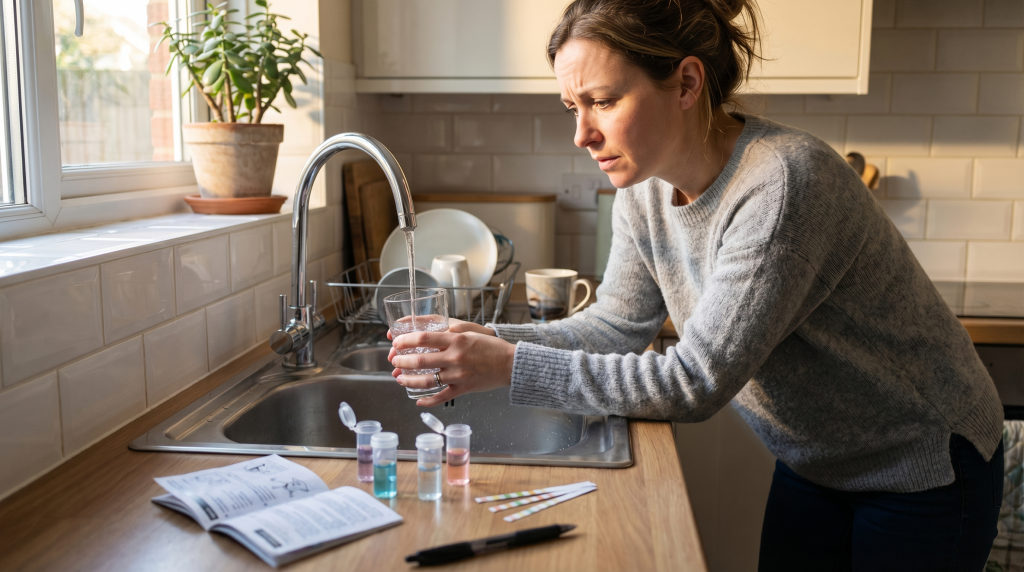
Home water quality testing with DIY test kit

How to Test Your Home Water Quality: DIY and Lab Testing Guide

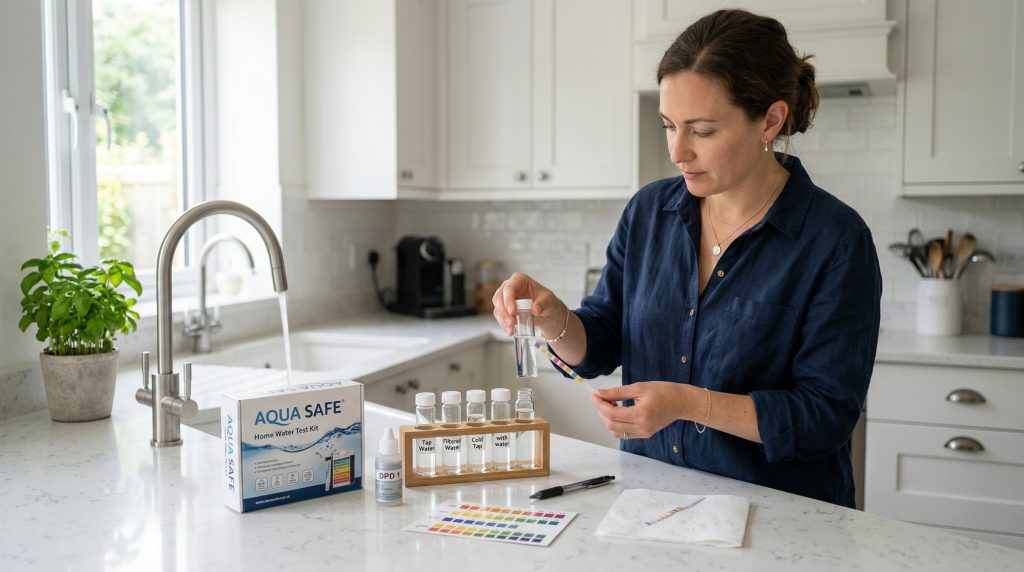
Quick Answer You can test home water quality using DIY test kits ($15-$50) for quick screening or certified laboratory testing ($50-$300) for comprehensive analysis. At minimum, test for bacteria, lead, nitrates, pH, and hardness. Well water owners should test annually. Municipal water users can start with their utility’s free Consumer Confidence Report, then test for contaminants of concern like lead (at the tap) and PFAS. Always test before purchasing a filtration system to ensure you buy the right one. Why Testing Your Water Matters You cannot determine water quality by looking at, smelling, or tasting your water. Many of the most dangerous contaminants — lead, arsenic, PFAS, nitrates, and bacteria — are invisible, odorless, and tasteless at concentrations that pose health risks. The only way to know what is in your water is to test it. The EPA regulates public water systems but does not regulate private wells. Approximately 23 million US households rely on private wells, and testing is the homeowner’s responsibility. Even on municipal water, contaminants like lead can enter water from household plumbing after it leaves the treatment plant. What to Test For Essential Tests for All Water Sources Contaminant EPA Limit (MCL) Why It Matters Test Frequency Total Coliform / E. coli 0 (zero tolerance) Indicates fecal contamination; immediate health risk Annually (well); as needed (city) Lead 15 ppb action level Neurotoxic; no safe level for children Once; after plumbing work Nitrate 10 mg/L Dangerous for infants; from fertilizer/septic Annually (well) pH 6.5-8.5 (SMCL) Affects corrosivity, pipe leaching Annually TDS (Total Dissolved Solids) 500 mg/L (SMCL) General water quality indicator Annually Hardness No EPA limit Scale buildup; soap efficiency Once; when issues arise Additional Tests Based on Your Situation PFAS — If you live near military bases, airports, or industrial facilities; EPA limit is 4 ppt for PFOA and PFOS Arsenic — Common in well water in certain regions (Southwest, New England); MCL is 10 ppb Iron and Manganese — If you notice staining, metallic taste (well water); SMCL 0.3 ppm / 0.05 ppm Radon — If your area has elevated radon in air; can dissolve into groundwater Volatile Organic Compounds (VOCs) — If you live near gas stations, dry cleaners, or industrial sites Pesticides/Herbicides — If you live in agricultural areas Fluoride — If you want to verify levels or remove it; SMCL is 2.0 mg/L DIY Home Water Test Kits Home test kits provide a quick, affordable screening of your water quality. They are available at hardware stores and online, typically ranging from $15-$50. Types of DIY Test Kits Test strips — Dip in water sample; color change indicates concentration. Quick (1-2 minutes) but least precise. Good for hardness, pH, chlorine, and basic screening. Drop/reagent kits — Add liquid reagents to water sample; color change is compared to a chart. More accurate than strips. Good for iron, hardness, pH, and specific contaminants. Digital TDS meters — Portable electronic devices that measure total dissolved solids. Inexpensive ($10-$20) and useful for monitoring RO system performance but does not identify specific contaminants. Mail-in kits — Collect samples at home and mail to a lab. Combines DIY convenience with lab accuracy. Typically $100-$200 for comprehensive panels. Certified Laboratory Testing For the most accurate and legally defensible results, use a state-certified laboratory. The EPA maintains a list of certified drinking water testing laboratories by state. Many state health departments also offer low-cost well water testing programs. What Lab Testing Costs Test Package What It Covers Typical Cost Basic well water panel Bacteria, nitrate, pH, hardness, TDS, iron $50-$100 Comprehensive panel Basic + lead, arsenic, manganese, fluoride, VOCs $150-$250 PFAS testing PFOA, PFOS, and other PFAS compounds $200-$400 Full environmental panel 100+ contaminants including pesticides, metals, VOCs $300-$600 How to Collect a Water Sample Proper sample collection is critical for accurate results. Follow these steps for the most reliable test. Use containers provided by the lab (or sterile containers for bacteria testing). Run the cold water faucet for 2-3 minutes before collecting to clear standing water. For lead testing, collect a first-draw sample before running water (lead accumulates while water sits in pipes). Do not touch the inside of the bottle or cap. Label each sample with date, time, and collection point. Deliver to the lab within 24-48 hours (bacteria samples within 6-24 hours depending on lab requirements). Keep samples cool during transport. Understanding Your Water Test Results Water test reports can be confusing. Key terms to understand include MCL (Maximum Contaminant Level, the legally enforceable limit set by EPA), MCLG (Maximum Contaminant Level Goal, the non-enforceable health-based goal, often zero for carcinogens), SMCL (Secondary Maximum Contaminant Level, aesthetic guidelines for taste, odor, and appearance), ppb or ug/L (parts per billion), and ppm or mg/L (parts per million, 1 ppm = 1,000 ppb). Compare each result against the EPA’s MCL. If any contaminant exceeds its MCL (or its MCLG for contaminants like lead where no level is truly safe), take action to address the contamination source and install appropriate water treatment. Key Takeaway: Testing is the essential first step before purchasing any water treatment system. A $50-$200 water test ensures you invest in the right filtration technology for your actual contaminants, rather than guessing and potentially spending hundreds of dollars on a system that does not address your specific water quality issues. Contact AMPAC Water Systems with your test results for a free system recommendation. Frequently Asked Questions How can I test my water quality at home for free? If you are on municipal water, request your utility’s Consumer Confidence Report (CCR), which is published annually and available for free. This shows treatment plant results but not conditions at your tap. For a truly free home test, some water treatment companies offer complimentary basic testing (hardness, pH, chlorine, iron, TDS) as part of a consultation. Digital TDS meters are reusable and cost under $15. How accurate are home water test kits? DIY test strips are useful for general screening but have limited precision, typically plus or minus 20-30%. Reagent-based

How to Test Your Home Water Quality: DIY and Lab Testing Guide Read More »

Commercial water treatment system in restaurant kitchen

Water Treatment for Restaurants: FDA Requirements and Best Systems

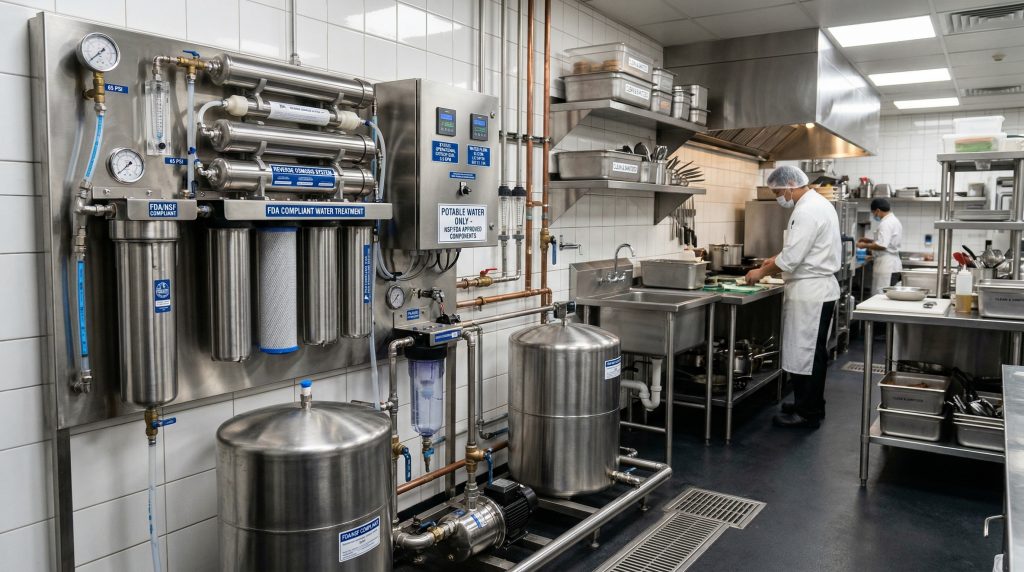
Quick Answer Restaurants must comply with FDA Food Code requirements for water quality, which mandate that water used for food preparation, ice making, and handwashing meet EPA drinking water standards. Key systems include commercial reverse osmosis for high-quality water, carbon filtration for ice machines and fountain beverages, and UV disinfection for an extra safety barrier. The specific system depends on your water source, local health department requirements, and the types of food and beverages you serve. FDA and Health Department Water Quality Requirements The FDA Food Code requires that water used in food establishments be obtained from an approved source that meets EPA National Primary Drinking Water Regulations. This applies to all water used for food preparation, cooking, ice making, beverage service, handwashing, equipment cleaning, and dishwashing. While municipal water meets these baseline requirements, many restaurants install additional treatment to improve water quality beyond minimum standards. This investment protects equipment, improves food and beverage quality, and provides an extra safety margin for customers. Water Quality Issues That Affect Restaurants Ice Machine Water Quality Ice machines are among the most water-sensitive equipment in a restaurant. Chlorine and minerals in water cause cloudy ice, off-flavors in beverages, and accelerated scale buildup that shortens machine life and increases energy consumption. A dedicated ice machine filter with carbon and scale inhibitor typically reduces service calls by 30-50% and produces clear, taste-neutral ice. Coffee and Espresso Water The Specialty Coffee Association (SCA) recommends water with TDS of 75-250 ppm (ideal: 150 ppm), calcium hardness of 17-85 ppm, pH of 6.5-7.5, and zero chlorine for optimal coffee extraction. Water that is too hard causes scale in espresso machines and bitter flavors. Water that is too soft produces flat, acidic coffee. A commercial RO system with remineralization can produce water precisely tuned for coffee quality. Steam Equipment and Combi Ovens Combi ovens, steamers, and steam tables require softened, low-TDS water to prevent scale accumulation. Hard water creates mineral deposits that clog steam generators, reduce heating efficiency, and eventually cause equipment failure. Most commercial steam equipment manufacturers require water softening as a condition of their warranty. Recommended Water Treatment Systems by Application Application Recommended System Key Specs Estimated Cost Ice machines Carbon + scale inhibitor filter 1-3 GPM; NSF 42/53 $150-$500 + $50-$100/yr filters Coffee / espresso RO with remineralization or blending valve 50-200 GPD; target 150 TDS $500-$2,000 Combi ovens / steamers Water softener + RO Sized to equipment GPD $800-$3,000 Fountain beverages Carbon filtration 1-5 GPM; chlorine/taste removal $200-$600 General kitchen use Whole-building carbon filter 10-20 GPM $500-$2,000 Well water source UV + sediment + carbon + RO Sized to peak demand $2,000-$8,000 Commercial Reverse Osmosis for Restaurants Commercial RO systems are becoming standard in quality-focused restaurants. RO removes 95-99% of dissolved contaminants, producing a consistent baseline water that can be remineralized to the exact specifications needed for each application. Benefits include consistent water quality regardless of municipal supply variations, elimination of chlorine, lead, PFAS, and other contaminants, extended equipment life through scale prevention, and better-tasting food and beverages. AMPAC Water Systems manufactures commercial RO systems designed for the flow rates and duty cycles required in food service environments. Systems range from compact under-counter units for coffee shops to high-capacity installations for full-service restaurants. Health Department Inspection Points Health inspectors evaluate several water-related items during routine restaurant inspections. These include verification that water comes from an approved source, hot water temperature at handwash sinks (minimum 100F), dishwasher rinse water temperature (minimum 180F for hot-water sanitizing or proper chemical sanitizer concentration), backflow prevention device installation and testing, and ice machine cleanliness and water filter maintenance records. Maintaining water treatment system maintenance logs demonstrates due diligence during inspections and can help resolve water quality questions quickly. Backflow Prevention Requirements All commercial water treatment equipment must comply with local plumbing codes for backflow prevention. RO systems in food service applications typically require an air gap or approved reduced-pressure zone (RPZ) assembly between the RO system and the building’s potable water supply. Check with your local plumbing authority for specific requirements. Key Takeaway: Restaurant water treatment is both a regulatory requirement and a quality investment. At minimum, install carbon filtration on ice machines and fountain beverage dispensers. For coffee shops and quality-focused restaurants, commercial RO with application-specific tuning delivers consistent results that protect equipment and enhance food and beverage quality. Contact AMPAC Water Systems for a restaurant water treatment consultation. Frequently Asked Questions What water filtration system does a restaurant need? At minimum, restaurants need carbon filtration on ice machines and beverage systems to remove chlorine and improve taste. Many also benefit from water softening for steam equipment and dishwashers. High-end restaurants and coffee shops often add commercial RO for precise water quality control. The exact system depends on your water source, menu, and equipment. Does the FDA require water filtration in restaurants? The FDA Food Code requires that restaurant water meet EPA drinking water standards, which municipal water already meets. Additional filtration beyond municipal treatment is not explicitly required by federal regulation, but many local health departments have additional requirements. Filtration is strongly recommended for equipment protection and food/beverage quality. How often should restaurant water filters be changed? Ice machine and beverage filters should be changed every 6 months or per the manufacturer’s rated capacity (typically 10,000-20,000 gallons). RO membranes last 2-3 years in commercial applications. Pre-filters (sediment, carbon) are typically changed every 3-6 months. Always follow the manufacturer’s schedule and keep maintenance logs for health inspections. What is the best water for making coffee in a restaurant? The Specialty Coffee Association recommends water with 150 ppm TDS (acceptable range: 75-250), calcium hardness of 17-85 ppm, total alkalinity around 40 ppm, and pH of 6.5-7.5. A commercial RO system with a remineralization cartridge or blending valve allows you to precisely dial in these parameters for optimal extraction and flavor. Can a restaurant use well water? Restaurants using well water must have the well approved by the local health authority, with regular testing to verify compliance with EPA drinking

Water Treatment for Restaurants: FDA Requirements and Best Systems Read More »

UV water purification system with ultraviolet light

UV Water Purification: How It Works and When You Need It

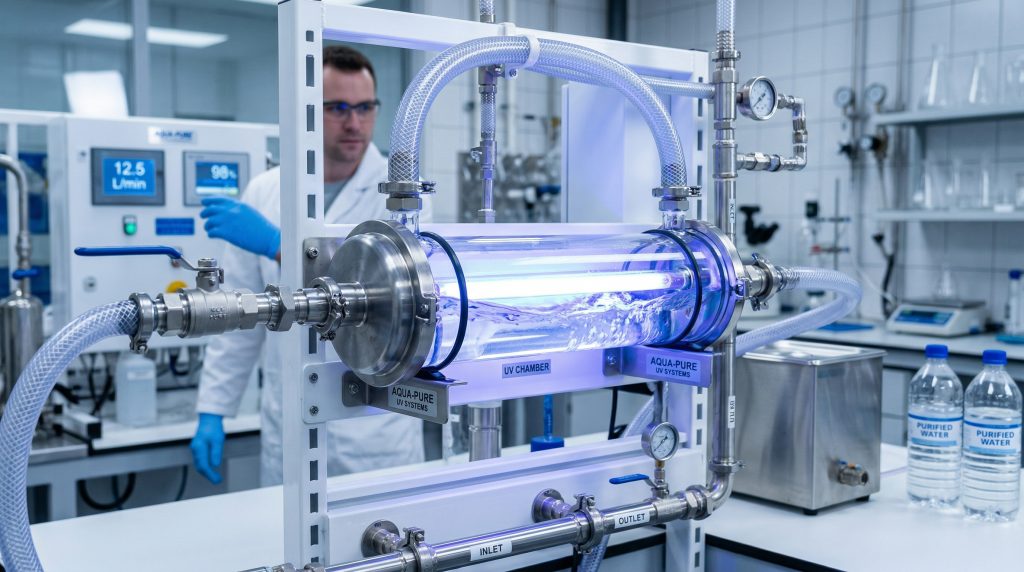
Quick Answer UV water purification uses ultraviolet light at 254 nanometers (UV-C) to inactivate 99.99% of bacteria, viruses, parasites, and other microorganisms without adding chemicals to your water. UV systems are essential for well water, homes on boil water advisories, and any water source at risk of microbial contamination. UV does not remove chemical contaminants or sediment — it is a disinfection-only technology best used as part of a multi-stage treatment system. How UV Water Purification Works Ultraviolet water purification exposes water to UV-C radiation as it flows through a stainless steel chamber containing a UV lamp. The UV light at 254 nm wavelength penetrates the cell walls of microorganisms and disrupts their DNA, preventing them from reproducing and rendering them harmless. UV disinfection is a physical process, not a chemical one. Unlike chlorination, it does not add anything to the water, produce disinfection byproducts, or alter the taste or odor of treated water. The EPA recognizes UV disinfection as an effective treatment for microbial contaminants in drinking water. What UV Purification Removes (and Does Not Remove) Contaminant UV Effectiveness Notes E. coli bacteria 99.99% inactivation Primary indicator of fecal contamination Coliform bacteria 99.99% inactivation Indicates potential pathogen presence Giardia lamblia 99.9% inactivation Common waterborne parasite Cryptosporidium 99.9% inactivation Chlorine-resistant; UV is highly effective Viruses (Hepatitis A, Rotavirus, etc.) 99.99% inactivation Higher UV dose required than bacteria Chlorine, chemicals Not removed Use activated carbon filtration Lead, heavy metals Not removed Use reverse osmosis Sediment, turbidity Not removed Pre-filtration required for UV to work effectively PFAS Not removed Use RO or activated carbon When You Need a UV Water Purification System UV purification is strongly recommended in several scenarios. If you rely on a private well, your water is not treated by a municipal utility, and bacteria can enter from surface runoff, nearby septic systems, or compromised well casings. If you have received a boil water advisory, UV provides equivalent protection without boiling. If your water test shows coliform bacteria or E. coli, UV provides ongoing disinfection after the contamination source is addressed. If you live near agricultural operations, animal waste and fertilizer runoff increase the risk of microbial contamination in groundwater. And if you use surface water (springs, streams), these sources carry significantly higher microbial risk than deep wells. UV System Components and Sizing Key Components UV lamp — Generates UV-C light at 254 nm; must be replaced annually regardless of whether it still illuminates (UV output degrades below effective levels before the lamp burns out) Quartz sleeve — Protects the UV lamp from water contact; must be cleaned periodically and replaced if scratched or etched Reactor chamber — Stainless steel housing that ensures water receives adequate UV exposure time Controller/ballast — Powers the lamp and may include UV intensity monitoring, lamp life countdown, and fault alarms UV sensor (optional) — Monitors actual UV dose delivery; essential for critical applications Sizing Guide Application Flow Rate Needed UV System Size Approx. Cost Single faucet / RV 0.5-1 GPM Small POU unit $100-$200 Small home (1-2 bath) 6-10 GPM Standard residential $300-$700 Large home (3+ bath) 12-18 GPM High-flow residential $500-$1,200 Small commercial 20-40 GPM Commercial grade $1,000-$3,000 Restaurant / food service 15-30 GPM NSF-certified commercial $1,500-$5,000 AMPAC Water Systems provides UV purification systems for residential through commercial applications, with options for every flow rate requirement. Pre-Treatment Requirements for UV UV systems have specific water quality requirements to function effectively. Turbidity must be below 1 NTU (nephelometric turbidity unit) because suspended particles can shield microorganisms from UV light. Iron should be below 0.3 ppm and manganese below 0.05 ppm, as these minerals deposit on the quartz sleeve and block UV transmission. Hardness should be managed to prevent scale buildup on the quartz sleeve. A typical pre-treatment configuration for well water includes a 5-micron sediment filter followed by an iron/manganese filter (if needed), then a water softener (if hard), and finally the UV system as the last stage before distribution. UV System Classes: NSF/ANSI 55 The NSF/ANSI Standard 55 defines two classes of UV systems: Class A (40 mJ/cm2) — Designed to disinfect microbiologically unsafe water. Required for well water, surface water, and any water that may contain pathogens. This is the class you need for primary disinfection. Class B (16 mJ/cm2) — Supplemental treatment for already disinfected water (municipal water). Provides an additional barrier but is not intended as the sole disinfection method for untreated water. For well water and other non-municipal sources, always choose a Class A system. Key Takeaway: UV purification is the most effective chemical-free method for eliminating waterborne pathogens. It is essential for private well owners and anyone relying on non-chlorinated water. However, UV only addresses biological contaminants — pair it with sediment filtration, carbon filtration, and/or reverse osmosis for comprehensive water treatment. Consult AMPAC Water Systems to design a complete treatment system that includes UV disinfection. Frequently Asked Questions How effective is UV water purification? UV purification is 99.99% effective against bacteria, viruses, and parasites when the system is properly sized and maintained. UV is particularly effective against Cryptosporidium, which is resistant to chlorine disinfection. Effectiveness depends on proper pre-filtration, adequate UV dose (40 mJ/cm2 for Class A), and annual lamp replacement. Does UV water purification remove chemicals? No. UV purification is a disinfection technology that targets microorganisms only. It does not remove chlorine, lead, PFAS, arsenic, nitrates, or other chemical contaminants. For chemical removal, pair UV with activated carbon filtration (for chlorine and VOCs) or reverse osmosis (for dissolved solids and heavy metals). How often should UV lamps be replaced? UV lamps should be replaced every 12 months (9,000 hours), even if they still illuminate. UV output degrades over time, and a lamp that produces visible light may no longer deliver the minimum UV dose needed for effective disinfection. The quartz sleeve should be cleaned every 12 months and replaced if scratched or etched. Can UV kill viruses in water? Yes. UV-C at 254 nm effectively inactivates waterborne viruses including Hepatitis A, Rotavirus, Norovirus, and

UV Water Purification: How It Works and When You Need It Read More »

Microplastics in drinking water EPA regulation

EPA Targets Microplastics in Drinking Water for First Time

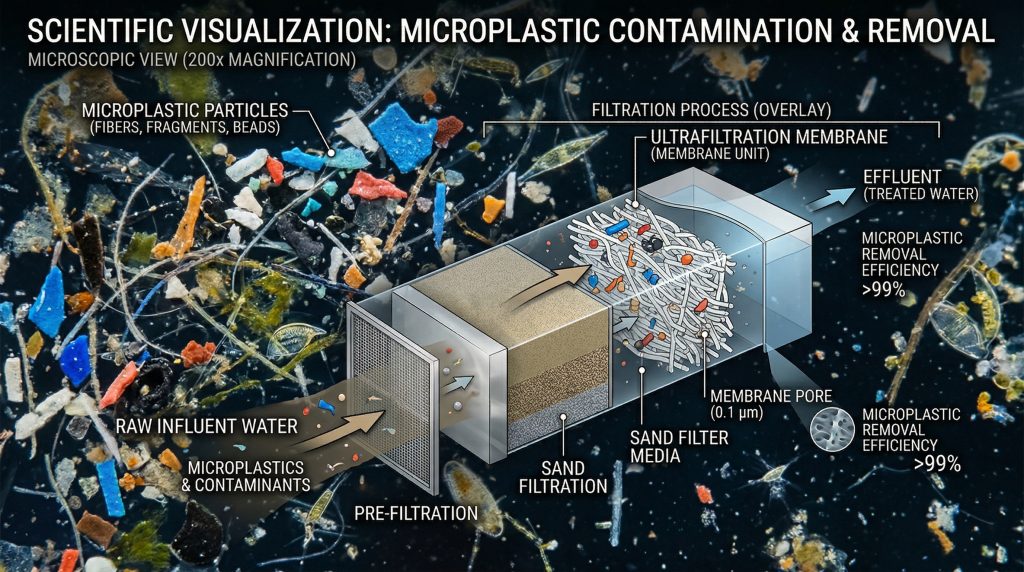
What Did the EPA Actually Do Regarding Microplastics? In April 2026, the U.S. Environmental Protection Agency added microplastics to the Contaminant Candidate List 6 (CCL 6)—the agency’s official registry of contaminants that are not yet subject to federal drinking water standards but are known or anticipated to occur in public water systems and may require regulation. This is a significant regulatory signal. Inclusion on the CCL is the first formal step in the process that can ultimately lead to a Maximum Contaminant Level (MCL)—a legally enforceable limit on the concentration of a substance in drinking water. The same pathway led to the EPA’s landmark PFAS drinking water standards finalized in 2024. To be clear: the CCL listing does not immediately impose any compliance requirements on water utilities or private water systems. What it does is trigger a formal review process, including regulatory determination (deciding whether to regulate), followed by potential MCL rulemaking. Based on historical timelines, if the EPA does proceed to regulation, enforceable standards could be in place by 2030–2032. For water system operators, treatment technology manufacturers, and industrial water users, the message is straightforward: microplastics regulation is no longer a matter of “if” but “when.” How Widespread Are Microplastics in Drinking Water? The short answer: they are virtually everywhere. Research published over the past several years has documented microplastics in drinking water sources and finished drinking water across the globe. A 2024 study published in the Proceedings of the National Academy of Sciences (PNAS) found an average of 240,000 detectable plastic fragments per liter of bottled water using advanced Raman spectroscopy—far more than previous estimates that relied on less sensitive detection methods. The particles were predominantly nanoplastics (less than 1 micrometer), with nylon, polyethylene terephthalate (PET), and polystyrene being the most common polymer types. The World Health Organization’s 2022 report on microplastics in drinking water reviewed studies from multiple countries and found microplastics present in both source water and treated drinking water, though concentrations varied by orders of magnitude depending on the source type and treatment methods used. Key findings from the research literature include: Surface water sources (rivers, lakes, reservoirs) consistently show higher microplastic concentrations than groundwater sources, due to runoff from urban areas, wastewater effluent, and atmospheric deposition. Groundwater is not immune. Studies have detected microplastics in aquifers, likely introduced through infiltration and well construction pathways. Conventional water treatment (coagulation, flocculation, sedimentation, sand filtration) removes an estimated 40–70% of microplastics depending on particle size and treatment conditions, leaving significant quantities in finished water. Wastewater treatment plants are both a sink and a source. They capture 80–95% of incoming microplastics but discharge the remainder, along with microplastics-laden biosolids applied to agricultural land. What Health Risks Do Microplastics in Water Pose? The health impacts of microplastics exposure through drinking water are an area of active and rapidly evolving research. While the full picture is not yet clear, the evidence to date has been sufficient to prompt regulatory action. Research published between 2023 and 2026 has identified several concerning pathways: Direct Particle Effects Microplastic and nanoplastic particles can cross biological barriers. A 2024 study in the journal Environment International detected microplastics in human blood, lung tissue, and placental tissue. Nanoplastics (particles smaller than 1 micrometer) are small enough to cross cell membranes and accumulate in organs. Animal studies have demonstrated inflammatory responses, oxidative stress, and gut microbiome disruption at exposure levels relevant to human dietary intake. Chemical Contaminant Vectors Microplastics act as carriers for other harmful substances. Plastic particles absorb hydrophobic organic contaminants from the surrounding water, including polycyclic aromatic hydrocarbons (PAHs), polychlorinated biphenyls (PCBs), and pesticides. When ingested, these adsorbed contaminants can desorb in the gastrointestinal tract, potentially increasing bioavailability. Additionally, plastic manufacturing additives—plasticizers like phthalates and bisphenol A (BPA), flame retardants, and UV stabilizers—can leach from the plastic particles into the body. Many of these additives are known endocrine disruptors. Microbial Biofilm Carriers Microplastic particles in water develop surface biofilms that can harbor pathogenic bacteria, including antibiotic-resistant organisms. These biofilms can protect microorganisms from disinfection, potentially allowing pathogens to survive treatment processes that would otherwise inactivate them. What Is the STOMP Program, and Why Does It Matter? In 2025, the U.S. Department of Health and Human Services (HHS) launched the STOMP initiative—Solutions to Overcome Microplastics Pollution—with $144 million in funding. The program coordinates research across the National Institutes of Health (NIH), the Centers for Disease Control and Prevention (CDC), and the Food and Drug Administration (FDA). STOMP’s priorities include: Developing standardized methods for detecting and measuring microplastics in drinking water, food, and biological samples Funding epidemiological studies on health effects of chronic low-level microplastics exposure Evaluating treatment technologies for microplastics removal from drinking water and wastewater Establishing reference materials and analytical standards for microplastics quantification The standardization piece is particularly important. One of the biggest obstacles to microplastics regulation has been the absence of standardized, validated analytical methods. Without agreed-upon measurement protocols, setting enforceable concentration limits is impractical. STOMP aims to close this gap, paving the way for EPA rulemaking. How Is California Leading on Microplastics Testing? California has consistently been at the forefront of drinking water contaminant regulation, and microplastics are no exception. In 2020, the California State Water Resources Control Board adopted the nation’s first definition of microplastics in drinking water and began requiring testing by large public water systems. By 2025, the state had released its first round of monitoring data from public water systems, providing the most comprehensive dataset on microplastics occurrence in drinking water in the United States. The data confirmed that microplastics are present in treated drinking water across the state, with concentrations varying based on source water type, treatment technology, and distribution system characteristics. Other states are watching California’s approach closely. Oregon, Washington, New York, and New Jersey have all initiated microplastics monitoring programs or studies, and several are considering state-level regulations that could precede federal standards. For water system operators and industrial water users across the country, California’s trajectory offers a preview of what national regulation is likely

EPA Targets Microplastics in Drinking Water for First Time Read More »

Iron contamination in well water comparison with filtered water

Iron in Well Water: Causes, Health Effects, and Removal Methods

Quick Answer Iron in well water is caused by naturally occurring iron deposits in soil and rock dissolving into groundwater. While iron is not a health hazard at typical well water levels (0.3-10+ ppm), it causes orange/brown staining on fixtures and laundry, metallic taste, clogged pipes, and can support iron bacteria growth. The most effective removal methods include oxidation + filtration (for high iron), water softeners (for low ferrous iron under 2 ppm), and specialized iron filter media like Birm or Greensand Plus. Why Does Well Water Have Iron? Iron is the fourth most abundant element in the earth’s crust, so it is no surprise that groundwater frequently dissolves iron as it percolates through soil and rock formations. The concentration of iron in well water depends on local geology, water table depth, soil composition, and the well’s aquifer characteristics. The EPA has set a Secondary Maximum Contaminant Level (SMCL) of 0.3 mg/L (0.3 ppm) for iron in drinking water. This is not a health-based standard but an aesthetic guideline. Iron above 0.3 ppm causes visible staining, taste changes, and plumbing issues. Many wells produce water with 1-10+ ppm of iron, far exceeding this threshold. Types of Iron in Well Water Understanding which type of iron you have is essential for choosing the correct removal method. Ferrous Iron (Clear-Water Iron) Ferrous iron (Fe2+) is dissolved in water and invisible when first drawn from the well. The water appears clear but turns orange or brown after sitting exposed to air for several minutes as the iron oxidizes. This is the most common form in well water and is the easiest to treat. Ferric Iron (Red-Water Iron) Ferric iron (Fe3+) has already oxidized and appears as visible orange-brown particles or cloudiness immediately when drawn from the well. Ferric iron can be removed with sediment filtration or mechanical filtration, though the underlying ferrous iron source typically also needs treatment. Iron Bacteria Iron bacteria are microorganisms that feed on dissolved iron, creating a slimy, rust-colored biofilm inside pipes, well casings, and fixtures. Signs include a reddish-brown slime in toilet tanks, musty or swampy odor (different from hydrogen sulfide), and reduced well yield over time. Iron bacteria require specific treatment including well shock chlorination and ongoing disinfection. Organic (Complexed) Iron When iron bonds with tannins or other organic compounds in the water, it forms organic iron that gives water a tea-colored or yellow appearance. This form is difficult to treat with standard oxidation methods and may require specialized media, chlorination, or activated carbon treatment. Health Effects and Problems Caused by Iron Iron in drinking water is generally not considered a health risk by the World Health Organization at concentrations commonly found in well water. However, it causes numerous practical problems including orange-brown staining on sinks, toilets, tubs, and laundry (especially whites), metallic taste that affects drinking water and cooking, staining on dishes washed in a dishwasher, buildup inside pipes that reduces water flow over time, shortened lifespan for water heaters and appliances, and promotion of iron bacteria that clog well screens and plumbing. Iron Removal Methods Compared Method Iron Types Removed Effective Range Pros Cons Water Softener Ferrous only 0-2 ppm Also removes hardness; common Iron fouls resin above 2 ppm Birm Filter Ferrous 0-10 ppm No chemicals; long media life Requires pH above 6.8; needs dissolved oxygen Greensand Plus Ferrous, ferric, manganese 0-15 ppm Effective; handles hydrogen sulfide Requires potassium permanganate regeneration Aeration + Filtration Ferrous, ferric 0-30+ ppm Chemical-free; handles very high iron Requires air injection system; more complex Chlorination + Filtration All types including bacteria 0-30+ ppm Most thorough; kills iron bacteria Requires chemical handling; carbon post-filter needed Sediment Filter Ferric (particulate) only Visual particles Inexpensive; simple Does not remove dissolved iron Choosing the Right Iron Removal System Low Iron (Under 2 ppm Ferrous) A standard water softener with iron-rated resin can handle low levels of ferrous iron while simultaneously removing hardness. Use an iron-cleaning resin cleaner monthly to prevent fouling. This is the simplest and most cost-effective approach for low-iron well water. Moderate Iron (2-10 ppm) Install a dedicated iron removal filter upstream of your water softener. Birm or Greensand Plus media systems are the most popular choices. Birm requires no chemicals but needs adequate dissolved oxygen and pH above 6.8. Greensand Plus is more versatile but requires periodic regeneration with potassium permanganate. High Iron (10+ ppm) or Iron Bacteria High iron levels require more aggressive treatment. Air injection (aeration) systems oxidize iron without chemicals and can handle 15-30+ ppm. For iron bacteria, chemical chlorination followed by carbon filtration is the most reliable approach. These systems should be designed by a water treatment professional. Testing for Iron in Well Water Accurate testing is essential. DIY test strips provide a rough estimate but lack the precision needed for system sizing. For the best results, submit a sample to a state-certified laboratory. Request a test that includes total iron, ferrous and ferric iron breakdown, manganese, pH, hardness, and TDS. Many state health departments offer low-cost well water testing programs. Key Takeaway: Iron in well water is a treatable problem, but the right solution depends on the type and concentration of iron, your water’s pH, and whether iron bacteria are present. Always test before buying equipment. A $50 water test can save you from installing a $1,500 system that does not address your specific iron problem. Contact AMPAC Water Systems for help interpreting your well water test results. Frequently Asked Questions Is iron in well water dangerous to drink? Iron in well water at typical concentrations (0.3-10 ppm) is not considered a health risk. The EPA’s 0.3 ppm guideline is based on aesthetic concerns (taste, staining), not health effects. However, very high iron levels can cause digestive discomfort in some individuals, and iron bacteria can indicate unsanitary well conditions that warrant further investigation. Why does my well water turn orange when it sits? This indicates ferrous (dissolved) iron in your water. When water is drawn from the well, the iron is invisible. Exposure to

Iron in Well Water: Causes, Health Effects, and Removal Methods Read More »

Water softener system installed with residential well pump

How to Choose a Water Softener for Well Water [2026 Guide]

Quick Answer Choosing a water softener for well water requires testing for hardness (gpg), iron content (ppm), and pH. Most well water needs a salt-based ion exchange softener sized to handle your daily water usage and regeneration frequency. If iron exceeds 2 ppm, you need an iron pre-filter or an oxidizing media system upstream of the softener. Salt-free conditioners do not actually remove hardness minerals and are not recommended for very hard well water (over 25 gpg). Why Well Water Needs Special Softening Considerations Well water presents unique challenges that municipal water users rarely face. Private wells draw groundwater that has dissolved minerals from surrounding rock and soil, often resulting in hardness levels of 10-50+ grains per gallon (gpg). The US Geological Survey classifies water above 10.5 gpg as “very hard,” and many well water sources exceed this significantly. Beyond calcium and magnesium (the minerals that define hardness), well water frequently contains dissolved iron, manganese, hydrogen sulfide (rotten egg smell), and sediment. These additional contaminants affect which softener type and configuration will work for your specific water chemistry. Step 1: Test Your Well Water Before purchasing any water softener, get a comprehensive well water test that includes total hardness (calcium and magnesium in gpg or ppm), iron content (ferrous and ferric), manganese levels, pH, TDS (total dissolved solids), hydrogen sulfide (if you notice rotten egg smell), and bacteria (coliform and E. coli). The EPA recommends annual well water testing at minimum. A detailed analysis helps you size and configure your softening system correctly. Understanding Water Hardness Levels Classification Grains Per Gallon (gpg) PPM (mg/L) Treatment Recommendation Soft 0-1 0-17 No softener needed Slightly Hard 1-3.5 17-60 Optional; benefits appliances Moderately Hard 3.5-7 60-120 Softener recommended Hard 7-10.5 120-180 Softener strongly recommended Very Hard 10.5+ 180+ Salt-based softener required Salt-Based vs Salt-Free: Which Works for Well Water? Salt-Based Ion Exchange Softeners Traditional salt-based softeners use ion exchange resin to swap calcium and magnesium ions for sodium ions. This is the only technology that truly removes hardness minerals from water. The resin periodically regenerates by flushing with a sodium chloride (salt) brine solution, sending the captured minerals to drain. Recommended for well water when: Hardness exceeds 7 gpg, you want actual mineral removal, you need to protect RO membranes downstream, or appliance and plumbing protection is a priority. Salt-Free Water Conditioners (TAC/Template Assisted Crystallization) Salt-free systems do not remove hardness minerals. Instead, they use Template Assisted Crystallization (TAC) media to change the crystal structure of calcium and magnesium so they are less likely to form scale. The minerals remain in the water, but in a form that resists adhering to surfaces. Limitations for well water: Salt-free conditioners are less effective with very hard water (above 25 gpg), do not work well when iron exceeds 0.3 ppm, do not remove hardness minerals (your TDS remains unchanged), and are ineffective if your water also needs iron or manganese treatment. Dealing with Iron in Well Water Iron is the primary complication when softening well water. Standard softener resin can handle small amounts of ferrous (clear-water) iron, typically up to 2 ppm. Beyond that, iron fouls the resin, reduces efficiency, and eventually ruins the softener. Iron Level Treatment Approach 0-2 ppm ferrous iron Standard softener resin can handle; use iron-cleaning resin cleaner monthly 2-5 ppm ferrous iron Iron pre-filter (oxidizing media like Birm or Greensand Plus) before softener 5+ ppm or ferric iron Dedicated iron removal system (aeration + filtration, or chemical oxidation) before softener Iron bacteria present Shock chlorination of well + continuous chlorination or UV before softener AMPAC Water Systems offers water softeners and iron filtration systems that can be configured specifically for well water chemistry. Sizing Your Water Softener Proper sizing ensures your softener provides continuous soft water without excessive salt consumption or premature regeneration. The key formula is: Daily softening requirement = Household members x Gallons per person per day x Hardness (gpg) + Iron compensation A typical household uses 75-100 gallons per person per day. Iron compensation adds 5 gpg of equivalent hardness for each 1 ppm of iron. For a family of four with 20 gpg hardness and 1 ppm iron: 4 x 80 x (20 + 5) = 8,000 grains per day. A 48,000-grain softener regenerating every 6 days would provide adequate capacity. Maintenance Tips for Well Water Softeners Check salt level monthly — keep the brine tank at least 1/3 full; use high-purity solar or evaporated salt to reduce bridging Use iron-cleaning resin cleaner — products like Res-Up or Iron Out should be used monthly if your well water contains any iron Inspect the brine tank annually — look for salt bridges (hardened crust above water level) and salt mush (sludge at the bottom) Test water hardness quarterly — verify the softener is performing; a sudden increase in hardness indicates resin exhaustion or a bypass issue Replace resin every 10-15 years — ion exchange resin degrades over time, especially with iron-heavy well water Key Takeaway: Well water softening requires more than just buying a softener. Test your water thoroughly, address iron and sediment before the softener, size the system to your household’s actual usage, and maintain it on a regular schedule. The investment pays for itself through extended appliance life, reduced plumbing repairs, and elimination of hard water staining. Frequently Asked Questions How much does a water softener for well water cost? A quality salt-based water softener for well water costs $500-$2,500 for the unit, plus $200-$500 for professional installation. If iron pre-treatment is needed, add $500-$1,500 for an iron filter. Annual operating costs (salt + filter replacements) typically run $100-$250. Can I use a salt-free softener on well water? Salt-free conditioners work best on moderately hard water (under 25 gpg) with minimal iron (under 0.3 ppm). Most well water exceeds these thresholds. If your well water is very hard or contains iron, a salt-based ion exchange softener is the only reliable option for true hardness removal. Will a water softener remove iron from well water? Standard

How to Choose a Water Softener for Well Water [2026 Guide] Read More »

Whole house water filter compared with under-sink RO system

Whole House Water Filter vs Under Sink: Which Do You Need?

Quick Answer A whole house water filter treats all water entering your home, providing filtered water at every faucet, shower, and appliance. An under-sink filter treats water at a single point-of-use, typically the kitchen sink. Choose whole house if you want protection everywhere (chlorine removal for showers, appliance protection). Choose under-sink if you primarily want clean drinking and cooking water and have a tighter budget. Understanding Point-of-Entry vs Point-of-Use Filtration The fundamental difference between whole house and under-sink water filters comes down to where they intercept your water supply. A whole house filter (also called point-of-entry or POE) installs on the main water line before it branches to individual fixtures. An under-sink filter (point-of-use or POU) installs beneath a single sink, typically with a dedicated faucet for filtered water. Both approaches have legitimate advantages, and many water treatment professionals recommend using both in combination for comprehensive protection. Whole House Water Filter: Complete Home Protection How Whole House Filters Work A whole house water filter installs on your main water line, usually near the water meter or pressure tank (for well water systems). Water passes through one or more filtration stages before reaching any fixture in your home. Common stages include sediment pre-filtration (5-20 microns), activated carbon for chlorine and chemical removal, and sometimes additional specialty media for iron, manganese, or hydrogen sulfide. Advantages of Whole House Filtration Every water outlet is filtered — kitchen, bathrooms, laundry, outdoor spigots Protects appliances and plumbing — removes sediment that damages water heaters, dishwashers, and washing machines Eliminates chlorine in showers — chlorine exposure through skin absorption and inhalation during showers can be significant Reduces scale buildup — when combined with water softening, extends appliance lifespan Single maintenance point — one system to maintain rather than filters on every fixture Limitations of Whole House Systems Higher upfront cost — $500-$3,000+ plus professional installation ($300-$1,000) Less contaminant specificity — typically focuses on sediment, chlorine, and general chemicals rather than specific dissolved contaminants Does not remove TDS — whole house systems generally do not include reverse osmosis, so dissolved solids, lead, PFAS, and fluoride pass through Requires adequate water pressure — multi-stage filtration creates pressure drop; homes with low pressure may need a booster pump Under-Sink Water Filter: Targeted Drinking Water Purification How Under-Sink Filters Work Under-sink systems mount inside the cabinet beneath your kitchen sink and connect to the cold water supply line. Most include a dedicated faucet installed on the countertop or sink deck for dispensing filtered water. Systems range from simple single-cartridge carbon filters to multi-stage reverse osmosis units with 4-7 filtration stages. Advantages of Under-Sink Filtration Superior contaminant removal — especially RO systems that remove 95-99% of TDS, lead, PFAS, arsenic, fluoride, and more Lower cost — quality under-sink RO systems start at $200-$500 DIY installation — most homeowners can install an under-sink system in 1-2 hours with basic tools No impact on water pressure — only affects the dedicated faucet, not your whole plumbing system Better taste — RO water is among the cleanest and best-tasting water available Limitations of Under-Sink Systems Single point-of-use — only filters water at the installed location Does not protect appliances — your water heater, dishwasher, and washing machine still receive unfiltered water RO produces wastewater — traditional RO systems waste 3-4 gallons per gallon produced (modern systems reduce this to 1:1 or better) Takes cabinet space — RO systems with tanks require significant under-sink room Side-by-Side Comparison Feature Whole House Filter Under-Sink Filter Coverage Every water outlet in home Single faucet (kitchen) Typical Cost $500-$3,000+ installed $150-$800 (DIY install) TDS/Lead/PFAS Removal No (carbon-based systems) Yes (RO systems) Chlorine Removal Yes Yes Sediment Removal Yes Yes Appliance Protection Yes No Flow Rate 10-25 GPM 0.5-2 GPM (RO: 50-100 GPD) Installation Professional recommended DIY friendly Annual Maintenance Cost $100-$400 $50-$200 When to Choose a Whole House Water Filter A whole house system makes the most sense when your water quality issues affect the entire home. Consider a POE system if you experience visible sediment in water from all faucets, strong chlorine smell in showers, hard water causing scale on fixtures and appliances, rust staining on laundry, sinks, and toilets, or well water with iron, manganese, or hydrogen sulfide. Explore AMPAC whole house filtration options for systems sized to your home’s flow requirements. When to Choose an Under-Sink Filter An under-sink system is the better choice when your primary concern is drinking and cooking water quality. Opt for POU filtration if you want to remove specific dissolved contaminants (lead, PFAS, arsenic, fluoride), your municipal water is generally acceptable but you want the cleanest drinking water possible, your budget is limited, you rent and cannot modify the main water line, or you want the convenience of DIY installation. Browse residential RO systems that fit standard under-sink installations. The Best Approach: Combining Both Systems Water treatment professionals often recommend a combined approach: a whole house system for general sediment and chlorine removal, paired with an under-sink RO system for the highest-quality drinking water. This layered strategy protects your plumbing and appliances while ensuring the water you drink and cook with is as pure as possible. Key Takeaway: Whole house filters and under-sink filters serve different purposes and are not interchangeable. Whole house systems protect your entire plumbing infrastructure; under-sink RO systems provide the purest possible drinking water. For the most comprehensive protection, use both. Contact AMPAC Water Systems for help designing a complete home water treatment solution. Frequently Asked Questions Can a whole house filter replace an under-sink RO system? No. Standard whole house filters use carbon and sediment media that cannot remove dissolved contaminants like lead, PFAS, fluoride, or arsenic. Only reverse osmosis or specialized ion exchange media can remove these at the point-of-use level. A whole house filter complements but does not replace an RO system. Do I need a whole house filter if I have city water? City (municipal) water is treated and disinfected, but it often contains residual chlorine or chloramines, which cause taste and

Whole House Water Filter vs Under Sink: Which Do You Need? Read More »

We Accept: VISA MasterCard AMEX Discover PayPal Authorize.net

© 2026 AMPAC Water Systems. All rights reserved. Manufactured in USA.

✓ 30+ Years Experience ✓ NSF Certified ✓ 500+ Installations Worldwide
Shopping Cart
A division of AMPAC USA - Commercial & Industrial Water Treatment Systems
Get a Free Quote
☎ Call (909) 548-4900
Ampac  Water Systems
Privacy Overview

This website uses cookies so that we can provide you with the best user experience possible. Cookie information is stored in your browser and performs functions such as recognising you when you return to our website and helping our team to understand which sections of the website you find most interesting and useful.