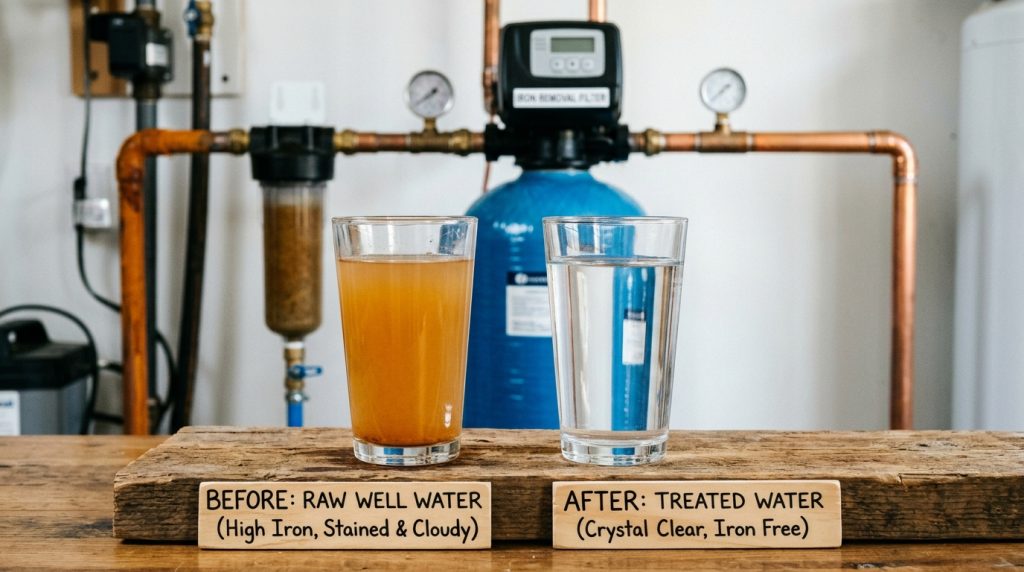
Quick Answer Iron in well water is caused by naturally occurring iron deposits in soil and rock dissolving into groundwater. While iron is not a health hazard at typical well water levels (0.3-10+ ppm), it causes orange/brown staining on fixtures and laundry, metallic taste, clogged pipes, and can support iron bacteria growth. The most effective removal methods include oxidation + filtration (for high iron), water softeners (for low ferrous iron under 2 ppm), and specialized iron filter media like Birm or Greensand Plus. Why Does Well Water Have Iron? Iron is the fourth most abundant element in the earth’s crust, so it is no surprise that groundwater frequently dissolves iron as it percolates through soil and rock formations. The concentration of iron in well water depends on local geology, water table depth, soil composition, and the well’s aquifer characteristics. The EPA has set a Secondary Maximum Contaminant Level (SMCL) of 0.3 mg/L (0.3 ppm) for iron in drinking water. This is not a health-based standard but an aesthetic guideline. Iron above 0.3 ppm causes visible staining, taste changes, and plumbing issues. Many wells produce water with 1-10+ ppm of iron, far exceeding this threshold. Types of Iron in Well Water Understanding which type of iron you have is essential for choosing the correct removal method. Ferrous Iron (Clear-Water Iron) Ferrous iron (Fe2+) is dissolved in water and invisible when first drawn from the well. The water appears clear but turns orange or brown after sitting exposed to air for several minutes as the iron oxidizes. This is the most common form in well water and is the easiest to treat. Ferric Iron (Red-Water Iron) Ferric iron (Fe3+) has already oxidized and appears as visible orange-brown particles or cloudiness immediately when drawn from the well. Ferric iron can be removed with sediment filtration or mechanical filtration, though the underlying ferrous iron source typically also needs treatment. Iron Bacteria Iron bacteria are microorganisms that feed on dissolved iron, creating a slimy, rust-colored biofilm inside pipes, well casings, and fixtures. Signs include a reddish-brown slime in toilet tanks, musty or swampy odor (different from hydrogen sulfide), and reduced well yield over time. Iron bacteria require specific treatment including well shock chlorination and ongoing disinfection. Organic (Complexed) Iron When iron bonds with tannins or other organic compounds in the water, it forms organic iron that gives water a tea-colored or yellow appearance. This form is difficult to treat with standard oxidation methods and may require specialized media, chlorination, or activated carbon treatment. Health Effects and Problems Caused by Iron Iron in drinking water is generally not considered a health risk by the World Health Organization at concentrations commonly found in well water. However, it causes numerous practical problems including orange-brown staining on sinks, toilets, tubs, and laundry (especially whites), metallic taste that affects drinking water and cooking, staining on dishes washed in a dishwasher, buildup inside pipes that reduces water flow over time, shortened lifespan for water heaters and appliances, and promotion of iron bacteria that clog well screens and plumbing. Iron Removal Methods Compared Method Iron Types Removed Effective Range Pros Cons Water Softener Ferrous only 0-2 ppm Also removes hardness; common Iron fouls resin above 2 ppm Birm Filter Ferrous 0-10 ppm No chemicals; long media life Requires pH above 6.8; needs dissolved oxygen Greensand Plus Ferrous, ferric, manganese 0-15 ppm Effective; handles hydrogen sulfide Requires potassium permanganate regeneration Aeration + Filtration Ferrous, ferric 0-30+ ppm Chemical-free; handles very high iron Requires air injection system; more complex Chlorination + Filtration All types including bacteria 0-30+ ppm Most thorough; kills iron bacteria Requires chemical handling; carbon post-filter needed Sediment Filter Ferric (particulate) only Visual particles Inexpensive; simple Does not remove dissolved iron Choosing the Right Iron Removal System Low Iron (Under 2 ppm Ferrous) A standard water softener with iron-rated resin can handle low levels of ferrous iron while simultaneously removing hardness. Use an iron-cleaning resin cleaner monthly to prevent fouling. This is the simplest and most cost-effective approach for low-iron well water. Moderate Iron (2-10 ppm) Install a dedicated iron removal filter upstream of your water softener. Birm or Greensand Plus media systems are the most popular choices. Birm requires no chemicals but needs adequate dissolved oxygen and pH above 6.8. Greensand Plus is more versatile but requires periodic regeneration with potassium permanganate. High Iron (10+ ppm) or Iron Bacteria High iron levels require more aggressive treatment. Air injection (aeration) systems oxidize iron without chemicals and can handle 15-30+ ppm. For iron bacteria, chemical chlorination followed by carbon filtration is the most reliable approach. These systems should be designed by a water treatment professional. Testing for Iron in Well Water Accurate testing is essential. DIY test strips provide a rough estimate but lack the precision needed for system sizing. For the best results, submit a sample to a state-certified laboratory. Request a test that includes total iron, ferrous and ferric iron breakdown, manganese, pH, hardness, and TDS. Many state health departments offer low-cost well water testing programs. Key Takeaway: Iron in well water is a treatable problem, but the right solution depends on the type and concentration of iron, your water’s pH, and whether iron bacteria are present. Always test before buying equipment. A $50 water test can save you from installing a $1,500 system that does not address your specific iron problem. Contact AMPAC Water Systems for help interpreting your well water test results. Frequently Asked Questions Is iron in well water dangerous to drink? Iron in well water at typical concentrations (0.3-10 ppm) is not considered a health risk. The EPA’s 0.3 ppm guideline is based on aesthetic concerns (taste, staining), not health effects. However, very high iron levels can cause digestive discomfort in some individuals, and iron bacteria can indicate unsanitary well conditions that warrant further investigation. Why does my well water turn orange when it sits? This indicates ferrous (dissolved) iron in your water. When water is drawn from the well, the iron is invisible. Exposure to
Iron in Well Water: Causes, Health Effects, and Removal Methods Read More »