
Quick Answer
Restaurants must comply with FDA Food Code requirements for water quality, which mandate that water used for food preparation, ice making, and handwashing meet EPA drinking water standards. Key systems include commercial reverse osmosis for high-quality water, carbon filtration for ice machines and fountain beverages, and UV disinfection for an extra safety barrier. The specific system depends on your water source, local health department requirements, and the types of food and beverages you serve.
FDA and Health Department Water Quality Requirements
The FDA Food Code requires that water used in food establishments be obtained from an approved source that meets EPA National Primary Drinking Water Regulations. This applies to all water used for food preparation, cooking, ice making, beverage service, handwashing, equipment cleaning, and dishwashing.
While municipal water meets these baseline requirements, many restaurants install additional treatment to improve water quality beyond minimum standards. This investment protects equipment, improves food and beverage quality, and provides an extra safety margin for customers.
Water Quality Issues That Affect Restaurants
Ice Machine Water Quality
Ice machines are among the most water-sensitive equipment in a restaurant. Chlorine and minerals in water cause cloudy ice, off-flavors in beverages, and accelerated scale buildup that shortens machine life and increases energy consumption. A dedicated ice machine filter with carbon and scale inhibitor typically reduces service calls by 30-50% and produces clear, taste-neutral ice.
Coffee and Espresso Water
The Specialty Coffee Association (SCA) recommends water with TDS of 75-250 ppm (ideal: 150 ppm), calcium hardness of 17-85 ppm, pH of 6.5-7.5, and zero chlorine for optimal coffee extraction. Water that is too hard causes scale in espresso machines and bitter flavors. Water that is too soft produces flat, acidic coffee. A commercial RO system with remineralization can produce water precisely tuned for coffee quality.
Steam Equipment and Combi Ovens
Combi ovens, steamers, and steam tables require softened, low-TDS water to prevent scale accumulation. Hard water creates mineral deposits that clog steam generators, reduce heating efficiency, and eventually cause equipment failure. Most commercial steam equipment manufacturers require water softening as a condition of their warranty.
Recommended Water Treatment Systems by Application
| Application | Recommended System | Key Specs | Estimated Cost |
|---|---|---|---|
| Ice machines | Carbon + scale inhibitor filter | 1-3 GPM; NSF 42/53 | $150-$500 + $50-$100/yr filters |
| Coffee / espresso | RO with remineralization or blending valve | 50-200 GPD; target 150 TDS | $500-$2,000 |
| Combi ovens / steamers | Water softener + RO | Sized to equipment GPD | $800-$3,000 |
| Fountain beverages | Carbon filtration | 1-5 GPM; chlorine/taste removal | $200-$600 |
| General kitchen use | Whole-building carbon filter | 10-20 GPM | $500-$2,000 |
| Well water source | UV + sediment + carbon + RO | Sized to peak demand | $2,000-$8,000 |
Commercial Reverse Osmosis for Restaurants
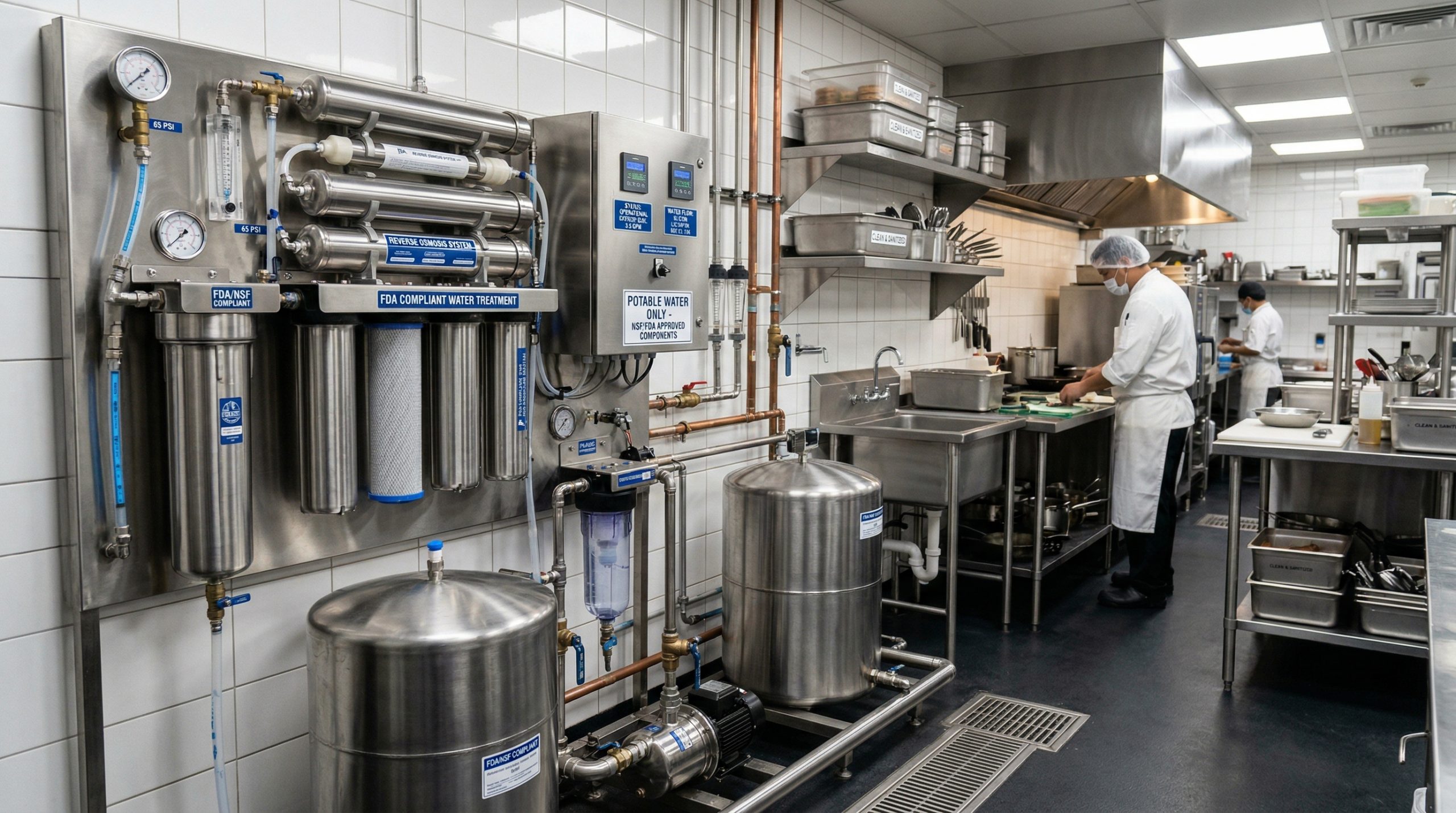
Commercial RO systems are becoming standard in quality-focused restaurants. RO removes 95-99% of dissolved contaminants, producing a consistent baseline water that can be remineralized to the exact specifications needed for each application. Benefits include consistent water quality regardless of municipal supply variations, elimination of chlorine, lead, PFAS, and other contaminants, extended equipment life through scale prevention, and better-tasting food and beverages.
AMPAC Water Systems manufactures commercial RO systems designed for the flow rates and duty cycles required in food service environments. Systems range from compact under-counter units for coffee shops to high-capacity installations for full-service restaurants.
Health Department Inspection Points
Health inspectors evaluate several water-related items during routine restaurant inspections. These include verification that water comes from an approved source, hot water temperature at handwash sinks (minimum 100F), dishwasher rinse water temperature (minimum 180F for hot-water sanitizing or proper chemical sanitizer concentration), backflow prevention device installation and testing, and ice machine cleanliness and water filter maintenance records.
Maintaining water treatment system maintenance logs demonstrates due diligence during inspections and can help resolve water quality questions quickly.
Backflow Prevention Requirements
All commercial water treatment equipment must comply with local plumbing codes for backflow prevention. RO systems in food service applications typically require an air gap or approved reduced-pressure zone (RPZ) assembly between the RO system and the building’s potable water supply. Check with your local plumbing authority for specific requirements.
Key Takeaway: Restaurant water treatment is both a regulatory requirement and a quality investment. At minimum, install carbon filtration on ice machines and fountain beverage dispensers. For coffee shops and quality-focused restaurants, commercial RO with application-specific tuning delivers consistent results that protect equipment and enhance food and beverage quality. Contact AMPAC Water Systems for a restaurant water treatment consultation.
Frequently Asked Questions
What water filtration system does a restaurant need?
At minimum, restaurants need carbon filtration on ice machines and beverage systems to remove chlorine and improve taste. Many also benefit from water softening for steam equipment and dishwashers. High-end restaurants and coffee shops often add commercial RO for precise water quality control. The exact system depends on your water source, menu, and equipment.
Does the FDA require water filtration in restaurants?
The FDA Food Code requires that restaurant water meet EPA drinking water standards, which municipal water already meets. Additional filtration beyond municipal treatment is not explicitly required by federal regulation, but many local health departments have additional requirements. Filtration is strongly recommended for equipment protection and food/beverage quality.
How often should restaurant water filters be changed?
Ice machine and beverage filters should be changed every 6 months or per the manufacturer’s rated capacity (typically 10,000-20,000 gallons). RO membranes last 2-3 years in commercial applications. Pre-filters (sediment, carbon) are typically changed every 3-6 months. Always follow the manufacturer’s schedule and keep maintenance logs for health inspections.
What is the best water for making coffee in a restaurant?
The Specialty Coffee Association recommends water with 150 ppm TDS (acceptable range: 75-250), calcium hardness of 17-85 ppm, total alkalinity around 40 ppm, and pH of 6.5-7.5. A commercial RO system with a remineralization cartridge or blending valve allows you to precisely dial in these parameters for optimal extraction and flavor.
Can a restaurant use well water?
Restaurants using well water must have the well approved by the local health authority, with regular testing to verify compliance with EPA drinking water standards. Additional treatment is typically required, including UV disinfection, sediment filtration, and often RO. Health departments may require more frequent water testing for restaurants on well water compared to those on municipal supply.
Design Your Restaurant Water Treatment System
AMPAC Water Systems has been engineering commercial water treatment solutions for food service, hospitality, and beverage production for over two decades. We design systems that meet health code requirements while optimizing water quality for your specific menu and equipment lineup.
Request a free restaurant water assessment — we will evaluate your water quality, equipment needs, and local requirements to recommend the most effective and cost-efficient treatment solution.
Conclusion
This post covered the key considerations in selecting, sizing, and maintaining commercial water treatment systems for business applications. AMPAC Water Systems provides turnkey commercial water solutions with full lifecycle support from engineering and installation to service and monitoring. Contact us for a free consultation and system quote.