Quick Answer
The best home water filtration system depends on your water quality and contaminants. For most US homes, a reverse osmosis (RO) system provides the most thorough filtration, removing 95-99% of dissolved solids, lead, PFAS, and other contaminants. Whole house carbon filters are ideal for general chlorine and sediment removal. Test your water first to determine which system matches your specific needs.
Why Home Water Filtration Matters in 2026
Drinking water quality has become a growing concern for American homeowners. The EPA regulates over 90 contaminants, but emerging threats like PFAS (per- and polyfluoroalkyl substances), microplastics, and pharmaceutical residues are not yet fully regulated. According to the Environmental Working Group’s Tap Water Database, more than 250 contaminants have been detected in US drinking water systems.
A quality home water filtration system provides an essential barrier between your family and potential water contaminants. Whether you rely on municipal water or a private well, understanding your filtration options is the first step toward cleaner, safer water.
Types of Home Water Filtration Systems
Reverse Osmosis (RO) Systems
Reverse osmosis is considered the gold standard for point-of-use water purification. RO systems force water through a semi-permeable membrane with pores as small as 0.0001 microns, removing up to 99% of dissolved contaminants including lead, arsenic, fluoride, nitrates, and PFAS.
Best for: Homes with high TDS (total dissolved solids), lead concerns, PFAS contamination, or well water with nitrate issues. AMPAC Water Systems offers residential RO systems designed for varying household sizes and water quality challenges.
Activated Carbon Filters
Carbon filtration uses adsorption to remove chlorine, volatile organic compounds (VOCs), and unpleasant tastes and odors. Granular activated carbon (GAC) and carbon block filters are the two main types. Carbon block filters provide finer filtration and are more effective at removing smaller contaminants.
Best for: Municipal water with chlorine taste, VOC concerns, or as pre-filtration for RO systems.
UV Purification Systems
Ultraviolet purification uses UV-C light at 254 nanometers to inactivate bacteria, viruses, and parasites like Giardia and Cryptosporidium. UV systems do not remove chemical contaminants or sediment, so they are typically paired with other filtration methods.
Best for: Well water, boil water advisory areas, or any water source with microbial contamination risk. See our UV purification systems for residential and light commercial options.
Whole House Filtration Systems
Point-of-entry (POE) systems treat all water entering your home, protecting appliances, plumbing, and every faucet. Whole house systems typically combine sediment filters, carbon filters, and sometimes water softening or UV disinfection stages.
Best for: Homes wanting comprehensive protection at every tap, or those with significant sediment or chlorine issues affecting showers and appliances.
Comparison: Home Water Filtration System Types
| System Type | Contaminants Removed | Flow Rate | Avg. Cost | Maintenance |
|---|---|---|---|---|
| Reverse Osmosis | TDS, lead, PFAS, arsenic, fluoride, nitrates | 50-100 GPD | $200-$800 | Filter changes every 6-12 months; membrane every 2-5 years |
| Carbon Block | Chlorine, VOCs, taste, odor, some lead | 0.5-2 GPM | $50-$300 | Filter change every 6-12 months |
| UV Purification | Bacteria, viruses, parasites, cysts | 1-40 GPM | $150-$1,500 | Lamp replacement annually; sleeve cleaning |
| Whole House | Sediment, chlorine, some chemicals | 10-25 GPM | $500-$3,000+ | Sediment filter every 3-6 months; carbon every 6-12 months |
| Water Softener | Calcium, magnesium (hardness) | 10-20 GPM | $500-$2,500 | Salt refills every 4-8 weeks; resin every 10-15 years |
How to Choose the Right System for Your Home
Step 1: Test Your Water
Before purchasing any filtration system, get a comprehensive water test. For municipal water, request your utility’s annual Consumer Confidence Report (CCR). For well water, the EPA recommends annual testing for bacteria, nitrates, pH, and total dissolved solids at minimum.
Step 2: Identify Your Primary Contaminants
Match your water test results to the right filtration technology. If your water contains lead or PFAS, reverse osmosis is the most effective solution. For bacterial contamination in well water, UV purification is essential. High hardness levels require a dedicated water softener.
Step 3: Consider Your Household Size and Water Usage
A family of four typically uses 300-400 gallons of water per day. Under-sink RO systems serve drinking and cooking water needs at a single point-of-use. Whole house systems must be sized to handle peak demand, which occurs during morning routines when multiple fixtures run simultaneously.
Step 4: Budget for Long-Term Costs
The purchase price is only part of the total cost of ownership. Factor in replacement filters, membranes, salt (for softeners), UV lamp replacements, and potential professional installation. Over a 5-year period, an RO system typically costs $400-$600 in replacement filters beyond the initial purchase.
Key Takeaway
Key Takeaway: There is no single “best” filtration system for every home. Start with a water test, identify your specific contaminants, then match those to the appropriate technology. Many homes benefit from a multi-stage approach combining sediment pre-filtration, carbon filtration, and RO or UV treatment. Contact AMPAC Water Systems for a personalized recommendation based on your water test results.
Installation: DIY vs Professional
Under-sink RO systems and countertop filters are generally suitable for DIY installation. Whole house systems, UV systems that integrate into the main water line, and water softeners typically require professional plumbing. Incorrect installation can void warranties and create leaks or pressure issues.
The Water Quality Association (WQA) maintains a directory of certified water treatment professionals who can assess your needs and ensure proper installation.
Certifications to Look For
When evaluating filtration systems, look for NSF/ANSI certifications that verify performance claims:
- NSF/ANSI 42 — Aesthetic effects (chlorine taste, odor, clarity)
- NSF/ANSI 53 — Health effects (lead, cysts, VOCs)
- NSF/ANSI 58 — Reverse osmosis systems
- NSF/ANSI 55 — UV systems (Class A for disinfection, Class B for supplemental)
- NSF/ANSI 401 — Emerging contaminants (pharmaceuticals, PFAS)
Products certified by NSF International have been independently tested and verified to meet specific contaminant reduction claims.
Frequently Asked Questions
What is the best water filtration system for drinking water?
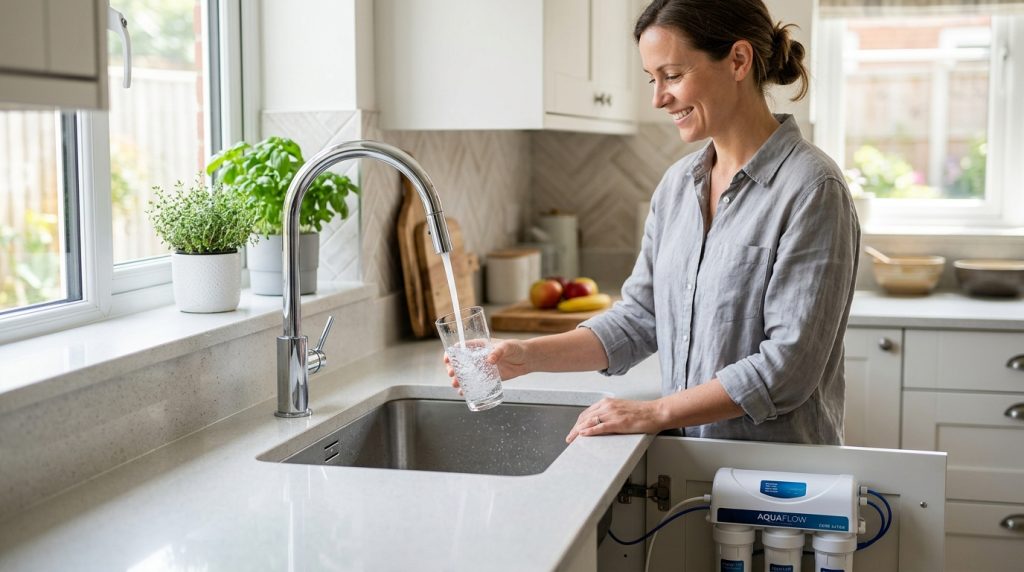
For drinking water, a reverse osmosis system provides the most comprehensive contaminant removal, eliminating 95-99% of dissolved solids including lead, PFAS, arsenic, and fluoride. Under-sink RO systems from AMPAC Water Systems are designed for residential use and fit beneath standard kitchen sinks.
How much does a whole house water filtration system cost?
Whole house water filtration systems range from $500 to $3,000+ depending on filtration stages, capacity, and features. Professional installation adds $300-$1,000. Annual maintenance costs (replacement filters, salt for softeners) typically run $100-$300 per year.
Do water filters remove PFAS?
Standard carbon filters reduce some PFAS, but reverse osmosis is the most effective residential technology for PFAS removal, achieving 90-99% reduction. Look for systems certified to NSF/ANSI 53 or 58 with specific PFAS testing data. Granular activated carbon alone is less effective for short-chain PFAS compounds.
How often should I replace my water filter?
Replacement schedules vary by filter type: sediment pre-filters every 3-6 months, carbon filters every 6-12 months, RO membranes every 2-5 years, and UV lamps annually. Follow the manufacturer’s recommendations and watch for signs like reduced flow rate, changed taste, or discoloration.
Is filtered water better than bottled water?
Home-filtered water is generally more cost-effective and environmentally friendly than bottled water. A quality RO system produces water comparable to or better than most bottled water brands at a fraction of the per-gallon cost. The EPA regulates tap water more strictly than the FDA regulates bottled water.
Get Expert Help Choosing Your System
Selecting the right water filtration system can feel overwhelming with so many options available. AMPAC Water Systems has been designing and manufacturing water treatment solutions for residential, commercial, and industrial applications for over 20 years. Our team can analyze your water test results and recommend the most effective, cost-efficient system for your specific situation.
Request a free consultation or call us to discuss your water quality concerns. We ship nationwide and offer technical support for all our systems.