Whole House Water Filter vs Under Sink: Which Do You Need?
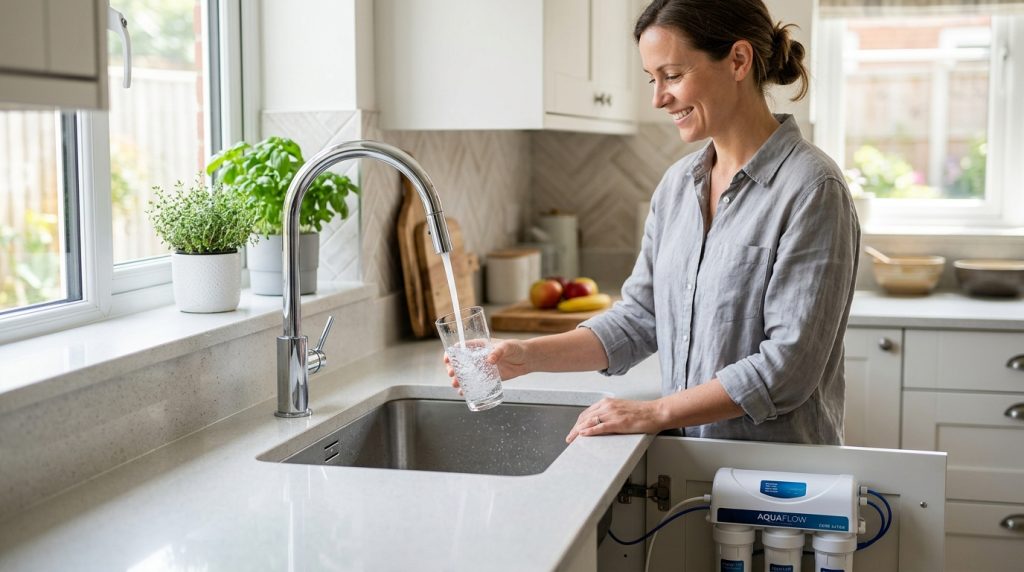
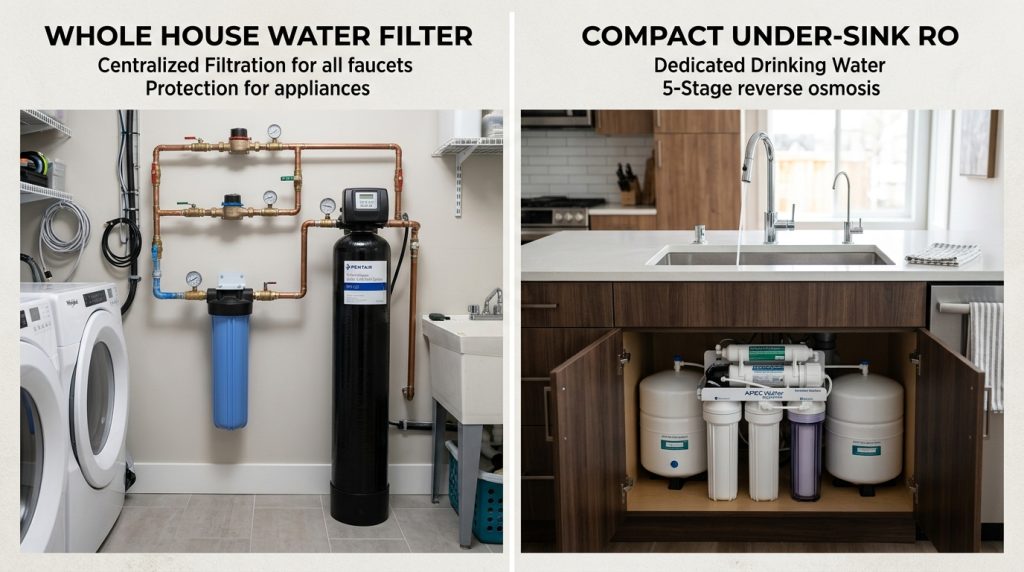
Quick Answer A whole house water filter treats all water entering your home, providing filtered water at every faucet, shower, and appliance. An under-sink filter treats water at a single point-of-use, typically the kitchen sink. Choose whole house if you want protection everywhere (chlorine removal for showers, appliance protection). Choose under-sink if you primarily want clean drinking and cooking water and have a tighter budget. Understanding Point-of-Entry vs Point-of-Use Filtration The fundamental difference between whole house and under-sink water filters comes down to where they intercept your water supply. A whole house filter (also called point-of-entry or POE) installs on the main water line before it branches to individual fixtures. An under-sink filter (point-of-use or POU) installs beneath a single sink, typically with a dedicated faucet for filtered water. Both approaches have legitimate advantages, and many water treatment professionals recommend using both in combination for comprehensive protection. Whole House Water Filter: Complete Home Protection How Whole House Filters Work A whole house water filter installs on your main water line, usually near the water meter or pressure tank (for well water systems). Water passes through one or more filtration stages before reaching any fixture in your home. Common stages include sediment pre-filtration (5-20 microns), activated carbon for chlorine and chemical removal, and sometimes additional specialty media for iron, manganese, or hydrogen sulfide. Advantages of Whole House Filtration Every water outlet is filtered — kitchen, bathrooms, laundry, outdoor spigots Protects appliances and plumbing — removes sediment that damages water heaters, dishwashers, and washing machines Eliminates chlorine in showers — chlorine exposure through skin absorption and inhalation during showers can be significant Reduces scale buildup — when combined with water softening, extends appliance lifespan Single maintenance point — one system to maintain rather than filters on every fixture Limitations of Whole House Systems Higher upfront cost — $500-$3,000+ plus professional installation ($300-$1,000) Less contaminant specificity — typically focuses on sediment, chlorine, and general chemicals rather than specific dissolved contaminants Does not remove TDS — whole house systems generally do not include reverse osmosis, so dissolved solids, lead, PFAS, and fluoride pass through Requires adequate water pressure — multi-stage filtration creates pressure drop; homes with low pressure may need a booster pump Under-Sink Water Filter: Targeted Drinking Water Purification How Under-Sink Filters Work Under-sink systems mount inside the cabinet beneath your kitchen sink and connect to the cold water supply line. Most include a dedicated faucet installed on the countertop or sink deck for dispensing filtered water. Systems range from simple single-cartridge carbon filters to multi-stage reverse osmosis units with 4-7 filtration stages. Advantages of Under-Sink Filtration Superior contaminant removal — especially RO systems that remove 95-99% of TDS, lead, PFAS, arsenic, fluoride, and more Lower cost — quality under-sink RO systems start at $200-$500 DIY installation — most homeowners can install an under-sink system in 1-2 hours with basic tools No impact on water pressure — only affects the dedicated faucet, not your whole plumbing system Better taste — RO water is among the cleanest and best-tasting water available Limitations of Under-Sink Systems Single point-of-use — only filters water at the installed location Does not protect appliances — your water heater, dishwasher, and washing machine still receive unfiltered water RO produces wastewater — traditional RO systems waste 3-4 gallons per gallon produced (modern systems reduce this to 1:1 or better) Takes cabinet space — RO systems with tanks require significant under-sink room Side-by-Side Comparison Feature Whole House Filter Under-Sink Filter Coverage Every water outlet in home Single faucet (kitchen) Typical Cost $500-$3,000+ installed $150-$800 (DIY install) TDS/Lead/PFAS Removal No (carbon-based systems) Yes (RO systems) Chlorine Removal Yes Yes Sediment Removal Yes Yes Appliance Protection Yes No Flow Rate 10-25 GPM 0.5-2 GPM (RO: 50-100 GPD) Installation Professional recommended DIY friendly Annual Maintenance Cost $100-$400 $50-$200 When to Choose a Whole House Water Filter A whole house system makes the most sense when your water quality issues affect the entire home. Consider a POE system if you experience visible sediment in water from all faucets, strong chlorine smell in showers, hard water causing scale on fixtures and appliances, rust staining on laundry, sinks, and toilets, or well water with iron, manganese, or hydrogen sulfide. Explore AMPAC whole house filtration options for systems sized to your home’s flow requirements. When to Choose an Under-Sink Filter An under-sink system is the better choice when your primary concern is drinking and cooking water quality. Opt for POU filtration if you want to remove specific dissolved contaminants (lead, PFAS, arsenic, fluoride), your municipal water is generally acceptable but you want the cleanest drinking water possible, your budget is limited, you rent and cannot modify the main water line, or you want the convenience of DIY installation. Browse residential RO systems that fit standard under-sink installations. The Best Approach: Combining Both Systems Water treatment professionals often recommend a combined approach: a whole house system for general sediment and chlorine removal, paired with an under-sink RO system for the highest-quality drinking water. This layered strategy protects your plumbing and appliances while ensuring the water you drink and cook with is as pure as possible. Key Takeaway: Whole house filters and under-sink filters serve different purposes and are not interchangeable. Whole house systems protect your entire plumbing infrastructure; under-sink RO systems provide the purest possible drinking water. For the most comprehensive protection, use both. Contact AMPAC Water Systems for help designing a complete home water treatment solution. Frequently Asked Questions Can a whole house filter replace an under-sink RO system? No. Standard whole house filters use carbon and sediment media that cannot remove dissolved contaminants like lead, PFAS, fluoride, or arsenic. Only reverse osmosis or specialized ion exchange media can remove these at the point-of-use level. A whole house filter complements but does not replace an RO system. Do I need a whole house filter if I have city water? City (municipal) water is treated and disinfected, but it often contains residual chlorine or chloramines, which cause taste and
Whole House Water Filter vs Under Sink: Which Do You Need? Read More »