
Quick Answer: What’s the Best Home Water Filter?
Honestly, the “best” home water filtration system really depends on your specific water quality and what contaminants you’re dealing with. For most homes across the U.S., a reverse osmosis (RO) system is tough to beat for thorough purification, zapping 95-99% of dissolved solids, lead, PFAS, and other nasty bits. If you’re mainly worried about chlorine taste or sediment, a whole-house carbon filter is usually your go-to. The key? Get your water tested first. It’s the only way to truly match the right system to your household’s unique needs.
Why Clean Water Isn’t Just a Luxury Anymore (Especially in 2026)
Let’s be real: drinking water quality is a growing concern for American homeowners. The EPA does a vital job regulating over 90 contaminants, but what about the newer threats? We’re talking about things like PFAS (per- and polyfluoroalkyl substances), microplastics, and even pharmaceutical residues – many of which aren’t fully regulated yet. What we’ve found in the field is alarming. The Environmental Working Group’s Tap Water Database shows that over 250 different contaminants have been detected in U.S. drinking water systems. That’s a lot to think about.
A solid home water filtration system isn’t just a nice-to-have; it’s an essential barrier. It protects your family from potential water contaminants. Whether your water comes from a city tap or a private well, understanding your filtration options is the critical first step towards consistently cleaner, safer water at every faucet.
Breaking Down Home Water Filtration Systems
Reverse Osmosis (RO) Systems
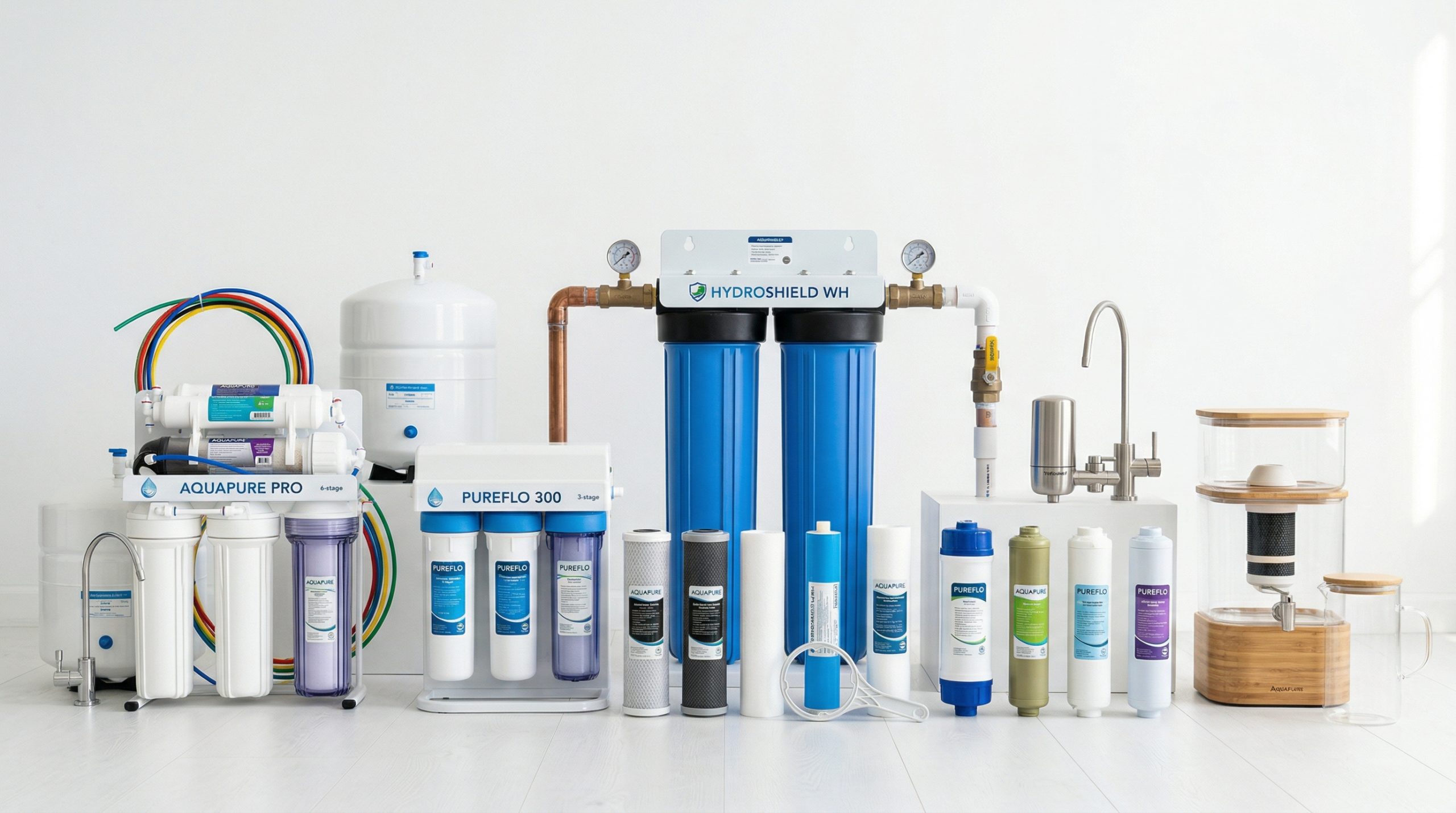
When it comes to point-of-use water purification – think drinking and cooking water – reverse osmosis is often considered the gold standard. These systems push water through an incredibly fine semi-permeable membrane. How fine? We’re talking pores as small as 0.0001 microns! This process removes up to 99% of dissolved contaminants, including heavy hitters like lead, arsenic, fluoride, nitrates, and those stubborn PFAS compounds. It’s truly impressive technology.
Best for: Homes battling high TDS (total dissolved solids), concerns about lead exposure, confirmed PFAS contamination, or well water with nitrate issues. We’ve installed hundreds of AMPAC Water Systems residential RO systems, each one precisely designed for various household sizes and unique water quality challenges.
Activated Carbon Filters
Carbon filtration is a workhorse. It uses adsorption – essentially, contaminants stick to the carbon’s surface – to strip out chlorine, volatile organic compounds (VOCs), and those unpleasant tastes and odors. You’ll primarily see two types: granular activated carbon (GAC) and carbon block filters. Carbon block filters, in our experience, offer a denser, finer filtration and are generally more effective at capturing smaller contaminants than GAC.
Best for: Improving municipal water that tastes or smells like chlorine. They’re also great for VOC concerns or as a robust pre-filtration stage for an RO system.
UV Purification Systems
Ultraviolet (UV) purification is a fantastic solution for microbial issues. It blasts water with UV-C light, specifically at 254 nanometers, to inactivate bacteria, viruses, and parasites such as Giardia and Cryptosporidium. However, UV systems don’t remove chemical contaminants or sediment. That’s why we almost always pair them with other filtration methods for comprehensive protection.
Best for: Well water supplies, areas under boil water advisories, or any water source where microbial contamination is a known risk. Check out our UV purification systems – we have options for both residential and light commercial applications.
Whole House Filtration Systems
These are often called Point-of-Entry (POE) systems because they treat all the water coming into your home right at the main line. This protects not just your drinking water, but also your appliances, plumbing, and every single faucet. A typical whole-house setup combines sediment filters, robust carbon filters, and sometimes even a water softening unit or a UV disinfection stage. It’s about total home protection.
Best for: Homeowners who want comprehensive protection at every tap. They’re also ideal for properties with significant sediment problems or strong chlorine odors affecting showers and washing machines.
Quick Look: Home Water Filtration System Comparison
| System Type | Contaminants Removed | Flow Rate | Avg. Cost | Maintenance |
|---|---|---|---|---|
| Reverse Osmosis | TDS, lead, PFAS, arsenic, fluoride, nitrates | 50-100 GPD | $200-$800 | Filter changes every 6-12 months; membrane every 2-5 years |
| Carbon Block | Chlorine, VOCs, taste, odor, some lead | 0.5-2 GPM | $50-$300 | Filter change every 6-12 months |
| UV Purification | Bacteria, viruses, parasites, cysts | 1-40 GPM | $150-$1,500 | Lamp replacement annually; sleeve cleaning |
| Whole House | Sediment, chlorine, some chemicals | 10-25 GPM | $500-$3,000+ | Sediment filter every 3-6 months; carbon every 6-12 months |
| Water Softener | Calcium, magnesium (hardness) | 10-20 GPM | $500-$2,500 | Salt refills every 4-8 weeks; resin every 10-15 years |
How to Pick the Right System for Your Home: Our 4-Step Guide
Step 1: Test Your Water, Seriously.
Before you even think about buying a filtration system, get a comprehensive water test done. Honestly, this is where most people go wrong. For municipal water, your local utility’s annual Consumer Confidence Report (CCR) is a great start. If you’re on well water, the EPA recommends annual testing for at least bacteria, nitrates, pH, and total dissolved solids. Knowing what’s actually in your water saves you money and headaches down the line.
Step 2: Pinpoint Your Primary Contaminants
Once you have those test results, it’s about matching the findings with the right filtration technology. You need to align your water test findings with the right filtration technology. If your water shows lead or PFAS, for instance, reverse osmosis is your most effective solution. Bacterial contamination in well water? UV purification is absolutely essential. And if you’re battling high hardness levels – that’s calcium and magnesium – a dedicated water softener is the clear answer.
Step 3: Consider Your Household Size and Water Habits
Sizing matters. A typical family of four can easily go through 300-400 gallons of water per day. An under-sink RO system is perfect for drinking and cooking needs at one tap. Whole-house systems, however, must be sized to handle peak demand – that morning rush when everyone’s showering, flushing, and making coffee simultaneously. In our experience, undersizing a whole-house unit leads to frustrating pressure drops and reduced filter life.
Step 4: Factor in the Long-Term Costs
The upfront purchase price is only part of the equation. You absolutely need to budget for the total cost of ownership. This means replacement filters, new membranes, salt for softeners, UV lamp replacements, and potentially professional installation. For an RO system, for example, you’re looking at roughly $400-$600 in replacement filters over a five-year period, above and beyond the initial investment. Don’t let a low sticker price trick you; consider the ongoing maintenance.
Here’s the Takeaway
Bottom line: There isn’t one magical “best” filtration system for every home. You must start with a water test, identify your specific contaminants, and then match those to the appropriate technology. What we’ve seen is that many homes actually benefit most from a multi-stage approach – combining sediment pre-filtration, carbon filtration, and then either RO or UV treatment. Contact AMPAC Water Systems for a personalized recommendation based on your water test results. We’re here to help you get it right.
Installation: DIY or Call a Pro?
Some systems are relatively straightforward. Under-sink RO units and countertop filters are generally suitable for a savvy DIYer. However, for more complex systems like whole-house units, UV systems that integrate into your main water line, and water softeners, professional plumbing is almost always required. Incorrect installation can quickly void warranties, and we’ve seen plenty of leaks and pressure issues arise from improper setups. It’s worth doing it right the first time.
The Water Quality Association (WQA) is a fantastic resource. They maintain a directory of certified water treatment professionals who can accurately assess your needs and ensure everything is installed correctly and safely.
Certifications to Look For (And Why They Matter)
When you’re evaluating filtration systems, don’t just take a manufacturer’s word for it. Look for NSF/ANSI certifications. These aren’t just mere labels; they verify performance claims through independent testing. Here’s a quick breakdown of the most relevant ones:
- NSF/ANSI 42 — This standard covers aesthetic effects like chlorine taste, odor, and water clarity.
- NSF/ANSI 53 — This is for health effects, meaning it reduces contaminants like lead, cysts, and VOCs that pose health risks.